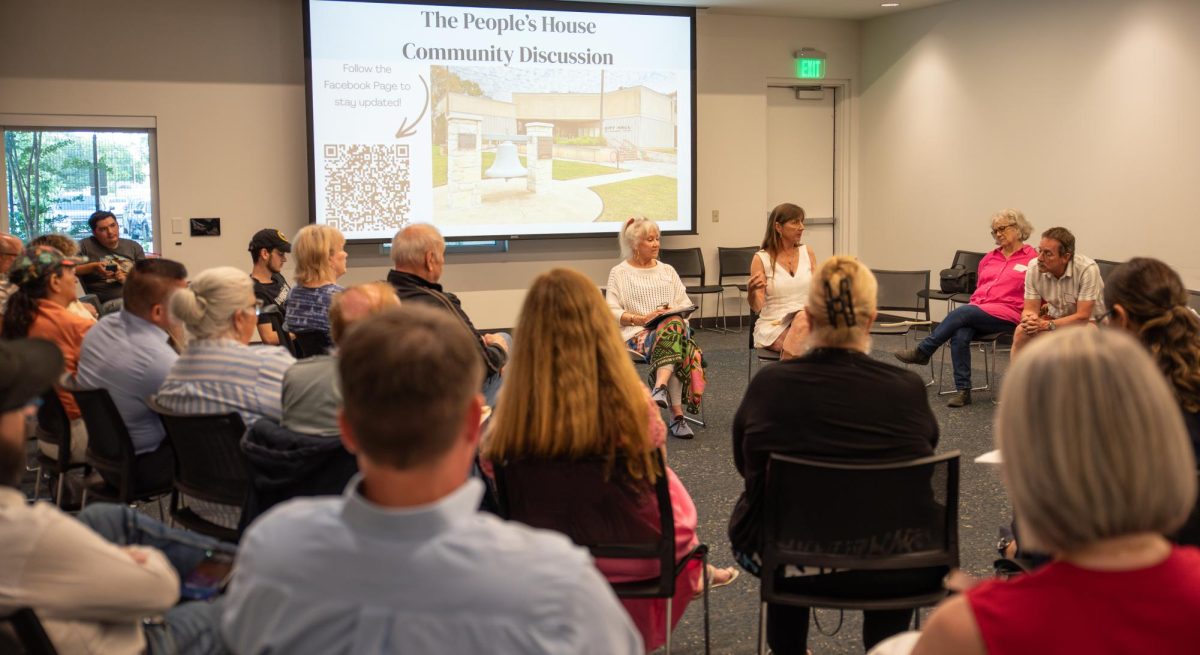


The Texas House of Representatives and Texas Senate held the first joint hearing for the Select Committee on Civil Discourse and Freedom of Speech in Higher Education on Thursday, Nov. 13.
Lt. Gov. Dan Patrick and Speaker of the House Dustin Burrows created the committee in September following the killing of Charlie Kirk at Utah Valley University. According to Patrick’s statement on the committee, its goal is to study and report on bias, discourse and freedom of speech across colleges and universities in Texas.
The first meeting of the committee featured testimony exclusively from invited speakers. According to the committee chairs future hearings will include testimony from the public and members of the higher education community, but the initial meeting was just for informational purposes.
“This is an organizational hearing intended to build a common foundation of knowledge among the members of this joint committee,” Chairman Rep. Terry Wilson (R-Georgetown) said. “Before we move into broader public hearings next year, it is essential that we all begin with a shared baseline.”
The hearing invited testimony from representatives of UT Austin, Texas A&M, state higher education officials, law enforcement and Turning Point USA. No representatives from Texas State University or the Texas State University System were present.
According to Committee Chair Sen. Paul Bettencourt (R-Houston) Texas State Student Government President Abby Myers was invited but could not attend due to a scheduling conflict. However, Myers said her and her entire executive team were initially invited, but declined due to a lack of information on how the hearing would be conducted and who would be present. She said that she was later invited to the Nov. 13 panel, which she then declined, that time due to scheduling conflicts.
In an email to The Star, Myers said that freedom of speech is a serious issue and that she believes recent changes to state law, such as Senate Bill 2972, have had a chilling effect on freedom of expression on campus.
At Texas State, SB 2972 has been adopted into the University’s policies. The policy has been used to limit where protests are conducted, how they are conducted and to remove multiple outside individuals from campus.
“The responsibility I carry in my role is to always be the strongest advocate I can be for students and their rights. In this case, participating in the aforementioned hearing under those conditions would not have allowed me to represent our students as effectively as they deserve,” Myers wrote in her email. “I want my choices to be proactive and impactful, not merely reactive due to insufficient time and information.”
Myers said she informed Bettencourt that she would be willing to testify in the future.
Lawmakers also hoped to hear from Devion Canty Jr., a former Texas State student who withdrew after Gov. Greg Abbott shared a video of Canty acting out Kirk’s death at a memorial and called for Canty’s expulsion. Canty was unable to testify. He previously told The Star he was staying outside of the state due to safety concerns.
Thomas Alter, a former associate history professor at Texas State, who was fired after speaking at a socialist convention, criticized the committee hearing for not being open to public testimony.
“This hearing needs faculty, additional students and staffers, not administrators and lawyers if they want to know what is going on on campuses,” Alter said.
The hearing testimonials opened with questions about Senate Bill 37 and its provisions, such as the changes to faculty senates, course audits and more.
Committee members questioned Commissioner of Higher Education Wynn Rosser about the role of the Texas Higher Education Coordinating Board in enforcement and training surrounding SB 37.
“SB 37 outlines several new obligations for our agency,” Rosser said. “SB 37 requires our agency to establish the General Education Advisory Committee (GEAC) to consider the knowledge and skills Texas graduates need to be prepared for the 21st century workforce.”
Rosser said GEAC would seek to lower the number of core credits required for degrees in Texas. He said the number of core credits required has remained the same since 1998.
“The GEAC will not be examining specific courses nor the content of specific courses,” Rosser said. “That work is the responsibility of each institution and system as required by SB 37.”
Texas State is currently auditing all of its core classes and several other classes it chose to include in its first auditing phase.
No future hearings have been scheduled at this time, but Wilson said that more hearings will be held by the committee in 2026.