
For a policy meant to improve the health of Texans, the state’s Supplemental Nutrition Assistance Program (SNAP) changes might just make some San Marcos residents less healthy.
In a community already threatened by food insecurity, Texas’ SNAP restrictions stand to leave some residents hungry, and others sick. The restrictive nature of the bill walls off products without considering medical circumstance or food accessibility.
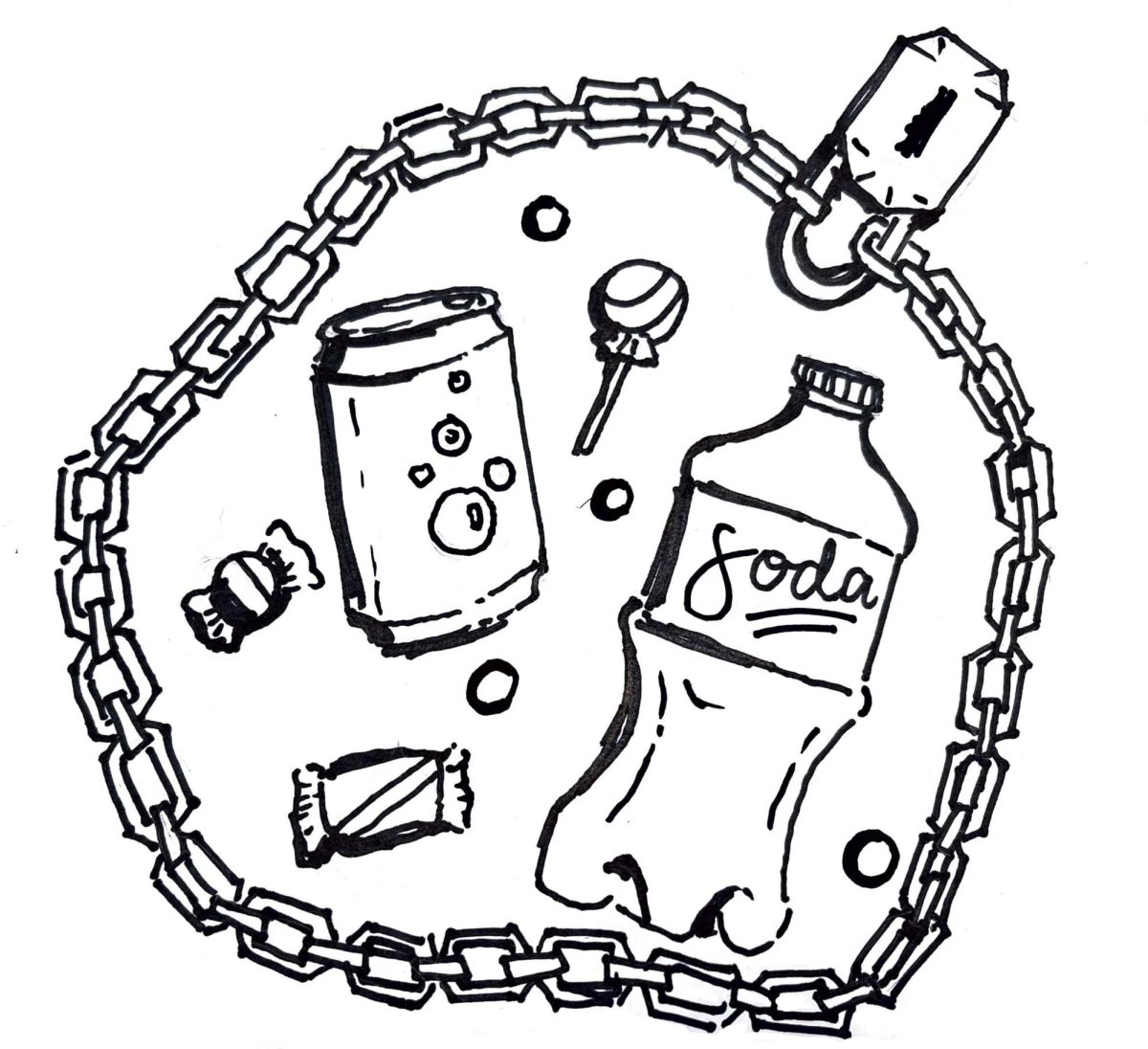
As of April 1, Texas SNAP recipients are no longer able to purchase candy and drinks containing five grams of sugar or more with their Lone Star Card. The Governor’s website framed it as part of the “Make America Healthy Again” (MAHA) initiative, with MAHA’s very own HHS Secretary Robert F. Kennedy Jr. alongside Gov. Greg Abbott at the bill’s signing ceremony.
A bill that aims to straddle fiscal responsibility with public health, struggles to implement positive changes in less than 300 words, because of how wholly complex the issues are. For San Marcos residents, it introduces a web of challenges to an already struggling community.
San Marcos, as of 2024, has a 15.9% food insecurity rate, according to the Central Texas Food Bank. Additionally, 16,472 of residents are eligible for SNAP benefits, according to Texas Health and Human Services latest report, in August 2025. Taking food, that is often cheaper and more accessible off of SNAP creates further restrictions on a group already constricted in their needs.
Mya Cashiola, interior design junior, who was formerly on SNAP benefits, said the government changing eligibility for food and beverages is unnecessary.
“At the end of the day, the goal is to be fed. Who cares what the food is?” Cashiola said.
Although the bill may have passed with the intention of forcing healthier habits and consumption, it simultaneously neglected to acknowledge all Texans and their medical needs.
Like most legislation, specifics aren’t considered like medical cases aren’t considered. What the legislator misses, though, are those who rely on sugary food and drinks as a matter of survival, not as a sweet treat.
Members in the San Marcos community with chronic health issues like diabetes and hypoglycemia rely on fast-acting carbs and sugars, and sometimes a sugary beverage might be the closest thing in reach. A SNAP recipient undergoing a medical emergency won’t be able to rely on a federal program designed to protect their health, introducing a dichotomy between the bill’s intent and its outcomes.
Abbott, however, seems convinced it protects those with chronic conditions.
“These bills that I am signing today put Texas on that pathway. Taxpayer dollars will no longer be used to fund chronic health problems in our state,” Abbott is quoted as saying on his website at the bill’s signing ceremony.
While medical circumstances may be specific, community members in San Marcos are affected by them, and the state risks overlooking medical needs for policy.
“Putting restrictions on [sweets] puts people into a bind. If they cannot afford insulin, and you take away their alternative, which in some cases can be candy, how do they regulate their sugar?” Cashiola said.
-Andrew Bencivengo is a business management junior and Regina Orozco Lopez Forment is an English junior