
Short-form content has changed the way students consume information, disregarding nuance and prioritizing entertainment.
With this content becoming increasingly prevalent, Texas State teachers and students may have to approach learning differently.
Short-form content is characterized as being momentary. Although short-form content has been found to be engaging and effective in communicating information, the brevity of these videos inhibits the introduction of nuance to complex topics, fostering surface-level understanding while offering instant gratification with little to no cognitive effort.
While obtaining overviews of information in short spans of time is attractive to the consumer, a surface-level understanding of a topic cannot be overcome without additional educational sources, such as in-depth sources and longer-form content.
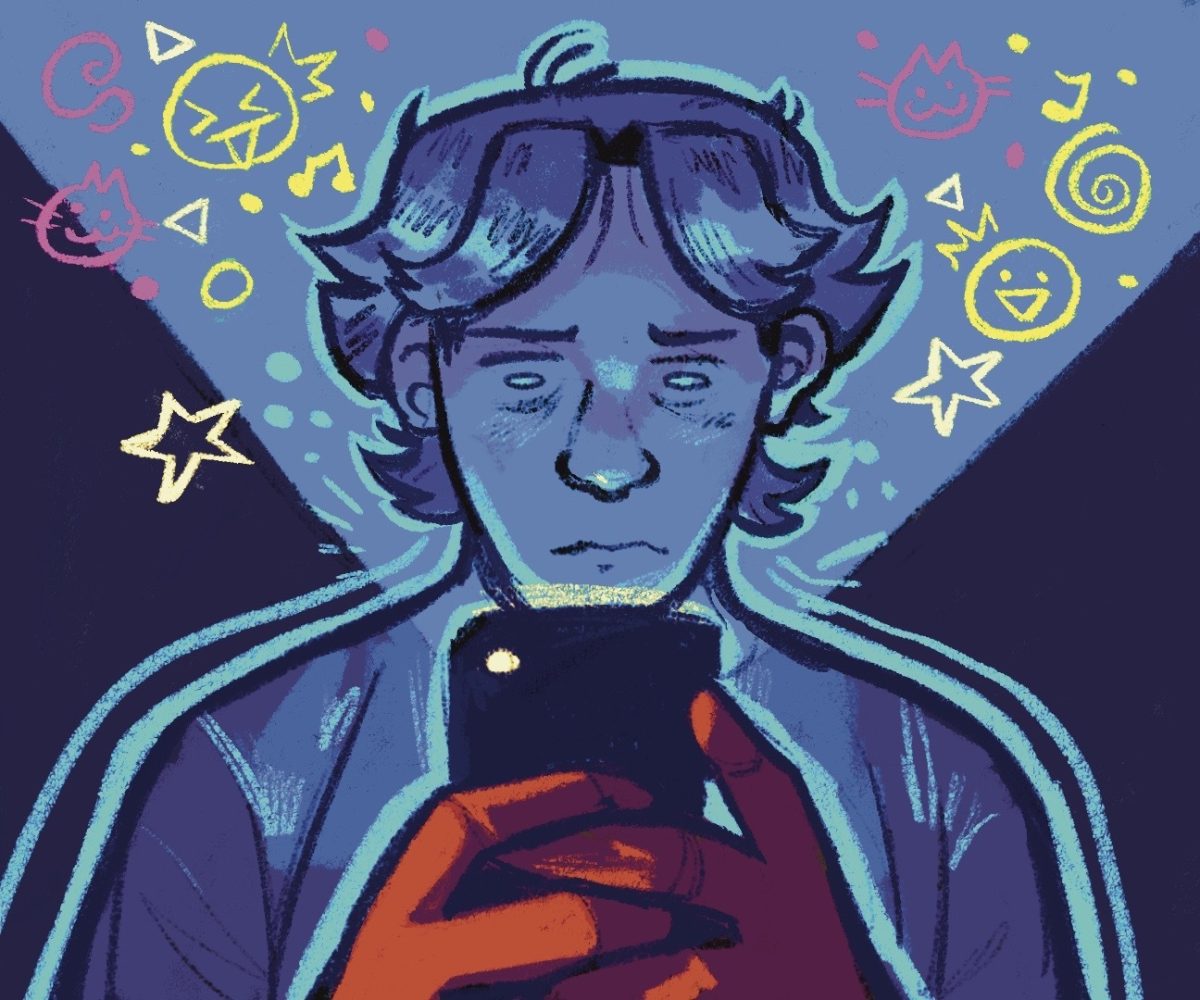
TikTok users reportedly spend an average of 1 hour and 37 minutes a day on the app, with college-age students making up approximately 85.4% of the app’s audience. Targeting students as a primary audience by utilizing algorithms that tailor content to the individual, personalized echo chambers are created. This endless stream of content blurs the lines between videos, distorting information while ensuring that the user stays engaged for longer periods of time.
According to a study conducted by PubMed Central, the continuous consumption of short-form content was found to increase students’ level of academic procrastination as attention span worsens. With lessened attention spans becoming a potential impact on the continuation of short-form content consumption, Texas State lecturers will have to adapt traditional learning strategies to effectively convey educational nuance.
It is projected that the average attention span will not improve. The University of Louisiana Monroe has opted for adapting their lectures to accommodate students’ lessened attention span, implementing storytelling in lectures and embracing micro-lessons, breaking longer readings into more manageable chunks. Changes such as these may be seen at Texas State as they will be vital in combatting declining attention span trends and maintaining analytical thinking standards.
The addictive nature of social media, in conjunction with the human baseline capability for concentration falling from 12 to 8 seconds, will become increasingly relevant for Texas State educators to consider when making edits to their curricula. More engaging teaching methods such as group work, hands-on activities and classroom conversations will become more impactful in conveying information than classic lecture style lessons.
Assistant Professor of Instruction of English and 10-year K-12 teacher, Rebekah Proffer, said that she received shocking reactions from students when assigning a textbook chapter that was recently reformatted to include more photos, making the text appear longer than it had in previous years.
“It [an assigned textbook reading] is eight and a half pages long with a lot of pictures, but every semester when this chapter comes up, it’s the same conversation. [Student’s respond] ‘Yeah, it was good, but it was long, and I kind of lost the thread towards the end,’” Proffer said.
Rising trends in short-form content consumption have the potential to normalize more rapid learning approaches, leaving previously utilized readings and lectures to appear longer and more overwhelming to students than they may have in previous years.
“Compared to the instant dopamine hit that we’re getting on the internet… sitting in a 90-minute lecture is such a different state of mind that you have to adapt to pay attention to this longer format,” Proffer said.
The stark difference in analytical thinking and attention required of students on the internet versus in a lecture will exacerbate surface-level learning further. Texas State lecturers and students alike need to adapt to the fast-paced dopamine rush cycle fostered on the internet in order to maintain vital academic nuance when addressing crucial topics.
-Mark Gabrielides is an English and education sophomore
The University Star welcomes Letters to the Editor from its readers. All submissions are reviewed and considered by the Editor in Chief and Opinions Editor for publication. Not all letters are guaranteed for publication.