
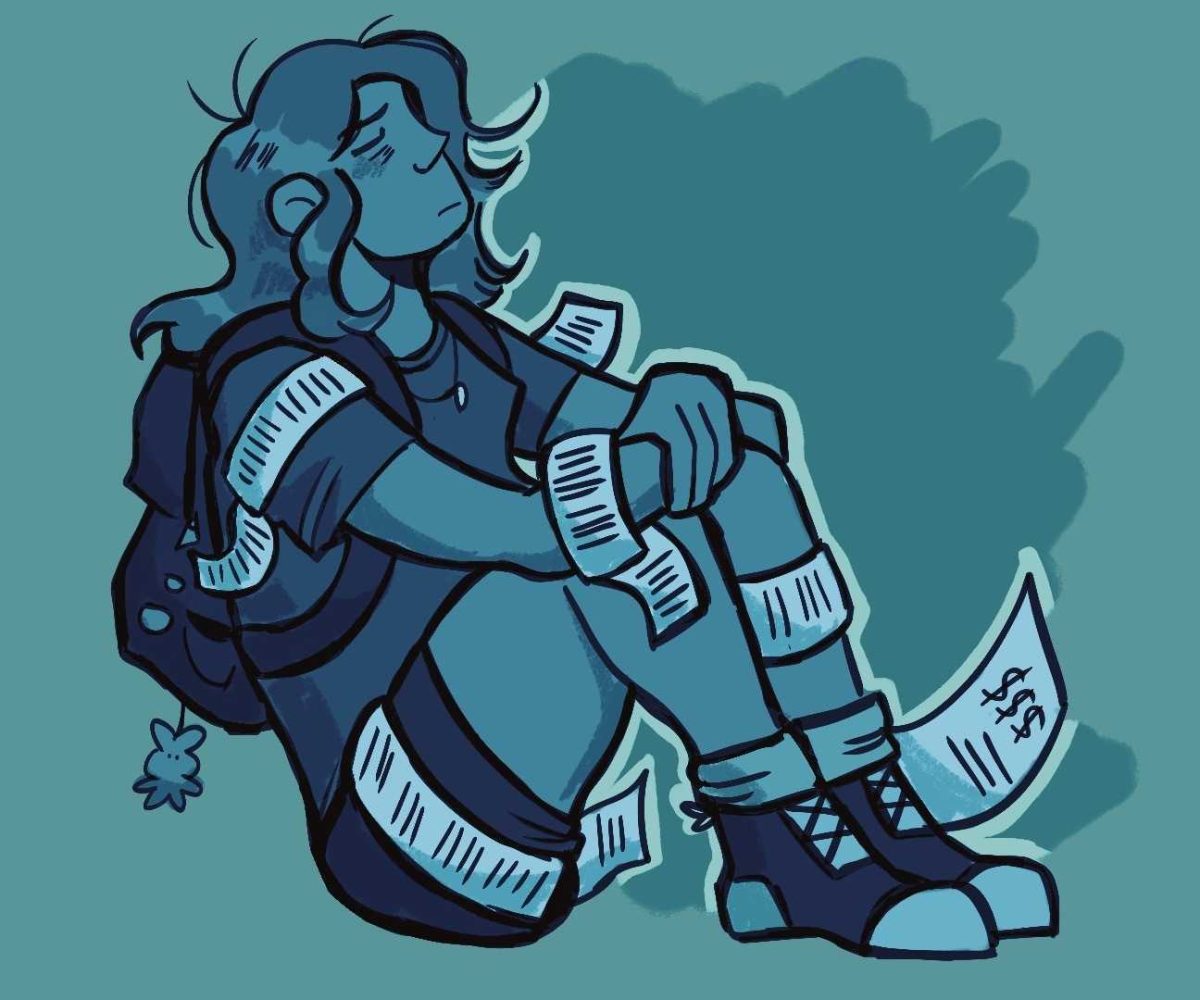
With changes in public policy and rapidly increasing prices, college students are working more than ever before and facing a new set of financial challenges.
As costs continue to rise, students are adjusting how they live and learn. Tuition at public Texas universities has roughly doubled over the last 15 years. An average student in 2020 spent almost 163% more on tuition than a student in 2003, according to the Texas Higher Education Coordinating Board.
Instead of working a few shifts for extra spending money, undergraduates are picking up consistent part-time or even full-time hours just to stay enrolled. According to the Texas Tribune, rising costs have already pushed many students to change how they live, including taking on more work hours, delaying graduation or reducing course loads.
Gavin O’Connor, computer science junior, said working as a student is more of a necessity than an option.
“Cost of living has increased, people need to work more in order to afford a college degree,” O’Connor said. “It’s a challenge having to work while in school.”
The cost of being a student has expanded far beyond the classroom. Rent, groceries and gas prices have all increased, turning what used to be manageable expenses into constant pressure.
Gas prices continue to fluctuate across the country as global tensions continue to push up crude oil costs. At the same time, rising food prices and changes to programs like SNAP add to the pressure and make it harder for students to afford groceries.
Cuts and restrictions on the federal student loan system are also putting pressure on undergraduates, and this tension is expected to intensify when the One Big Beautiful Bill Act takes effect in July 2026.
The inability of federal aid to keep up with rapidly changing factors forces some undergraduates to lose access to essential resources. The Hope Center for Student Basic Needs estimates nearly 60% of students experience at least one form of basic needs insecurity, such as food or housing.
Time that used to go toward studying, joining organizations or building connections is now spent clocking in. Students are scheduling classes around work shifts instead of the other way around. Some are taking fewer classes per semester to keep up with bills, stretching a four-year degree into five or six.
Barbara Green, who attended Texas State in 1951, said many undergraduates came from small towns and had limited financial aid like her, meaning they often had to work while in school, but not nearly as much as students do today.
“It was making a financial sacrifice on our families for us to be on campus and go to college,” Green said. “But student debt was not nearly what it is today. I am astounded when I hear the amount of indebtedness that students have when they graduate.”
A long-term analysis of college affordability shows just how dramatic the shift has been. In 1963, a student working a part-time minimum wage job could cover a full year of public college tuition by working a summer and a few hours a week. By 2024, that same strategy falls short, requiring significantly more hours just to keep up with tuition alone, not including housing or food.
“You gotta hang in there. It’s really hard to balance [school and work], but you just have to keep on keeping on,” Green said.
Students 70 years ago, along with those today, work, but that work has shifted from a choice to a need. There is no single fix to rising costs, but the gap between what colleges demand and what undergraduates can afford continues to grow. If working long hours becomes a requirement, then the structure of higher education needs to be adjusted.
Whether through expanded financial aid, more flexible academic options, or better access to paid opportunities, the reality is clear: students should not have to choose between staying enrolled and staying afloat.
-Mayam Ali is a computer science junior
The University Star welcomes Letters to the Editor from its readers. All submissions are reviewed and considered by the Editor in Chief and Opinions Editor for publication. Not all letters are guaranteed for publication.