

Static fire testing of rocket motors above the Edwards Aquifer recharge zone raises concerns over its environmental impact, with some doubting the measures Texas State has taken to mitigate risks.
In November 2024, Texas State announced a collaborative research project with X-Bow, a company that produces solid rocket motors. The company made a deal for the static testing of solid rocket motors on Texas State’s Freeman Ranch, a roughly 5,000 acre closed research facility located at 2101 Freeman Ranch Rd.
While the goal is to create a space for hands-on research opportunities, the site’s location has raised concerns about its environmental impact.
Texas State has, according to university policy, a “strong commitment to environmental preservation.” Projects that provide students with opportunities are acceptable, but they must be undertaken with an abundance of caution, especially if conducted near a critical water source.
X-Bows’ planned testing consists of static fire testing, a process where trials are done on the engine of a static rocket, in order to collect data on what a launch would look like. However, organizations like the San Marcos River Foundation (SMRF) cite concerns on the impact these tests may have on water quality.
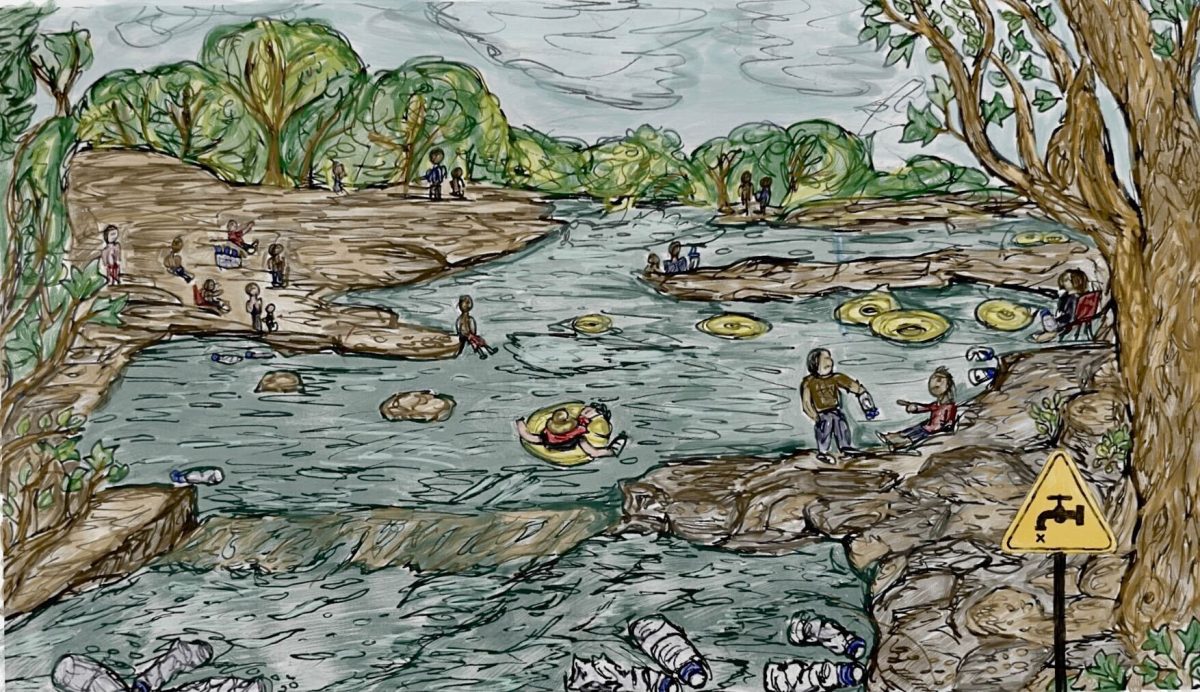
The Edwards Aquifer supplies water to an estimated 1.7 million people across Central Texas, according to the Texas Commission on Environmental Quality (TCEQ). If necessary precautions are not taken, or accidents happen, there is real concern that there could be contamination to a major water source, like if fuel pellets were thrown and swept into the discharge zone.
Chemicals commonly found in rocket fuel, such as ammonium perchlorate, are classified as toxic substances, according to the Agency for Toxic Substances and Disease Registry. Any testing that results in contamination above safe levels could impact the local population.
According to documents obtained by The Star, Texas State University applied for and received an exception to the Water Pollution Abatement Plan (WPAP), a plan required to protect water quality when a regulated activity is proposed in the Edwards Aquifer Recharge Zone. Texas State claimed that X-Bow has taken all necessary steps in compliance with TCEQ, but an exception to the WPAP does raise questions from the community.
Virginia Parker, executive director of the SMRF, said the community is united in its concern for Texas State’s choice of location for its research partnership.
“Over 7,500 people have signed our petition to ask Texas State to move this [rocket motor testing] off of the aquifer,” Parker said. “It should not be sitting over the aquifer at all.”
According to the letter sent by TCEQ, “The measures represented in the application demonstrate equivalent water quality protection for the Edwards Aquifer. Therefore, the application for the construction of the proposed project and methods to protect the Edwards Aquifer are approved, subject to applicable state rules and the conditions.” The document further claims that “No wastewater will be generated by this project.”
Assessments over emissions and potential risks appear to have been taken by Texas State and X-Bow to protect the environment, but some groups are not convinced.
The SMRF, for example, is concerned that while the emission calculations may fall within state and federal limits, environmental factors like rain are unaccounted for.
For its part, TCEQ appears convinced that the project does not call for concern, but accidents do happen, and the aquifer recharge zone cannot bear them. Fuel is in solid pellet form, but if a launch doesn’t go well, these pellets can be thrown from the test site and cause environmental damage. Further risks, like weather, make impacts hard to properly estimate.
Texas State is taking steps mandated by the law, but the risks raised beg the question on if a collaborative project is really worth the environmental risk.
-Mark Gabrielides is an English and education freshman and Andrew Bencivengo is a business management junior.
The University Star welcomes Letters to the Editor from its readers. All submissions are reviewed and considered by the Editor in Chief and Opinions Editor for publication. Not all letters are guaranteed for publication.