
Editor’s note: The original headline and lede incorrectly represented Texas State as leading the Rural Hospital Officers’ academy. This since has been corrected to represent this.
Texas State will be apart of the Texas State University System’s (TSUS) West Texas region of the Texas Rural Hospital Officer’s Academy, a new statewide effort to improve the finances and operations of rural hospitals.
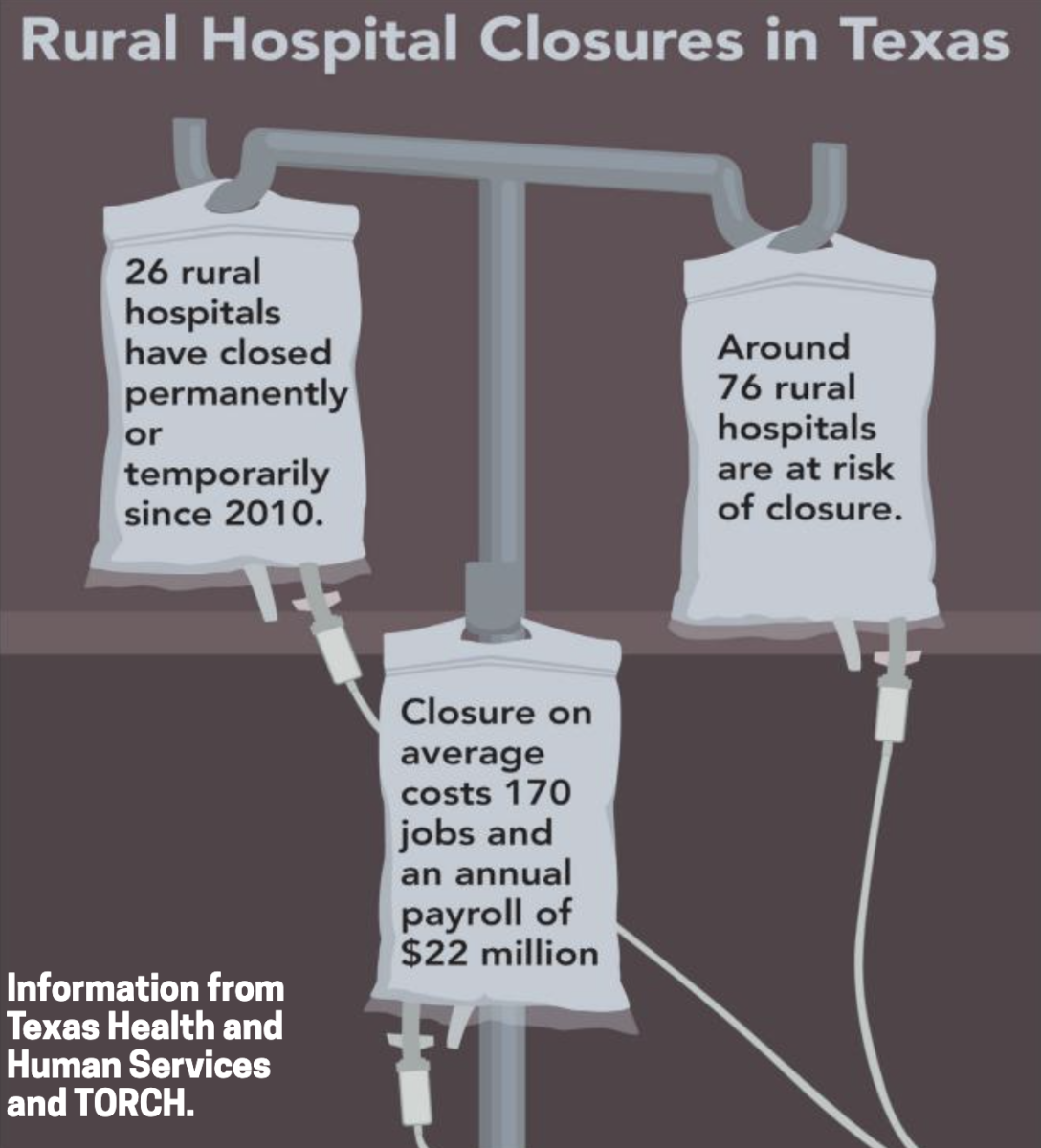
Established by House Bill 18 in 2025, the Texas Rural Hospital Officer’s Academy is a program to assist with professional development and education coursework to leaders in rural hospitals, counties with a population of 68,750 or less or hospitals deemed as “critical access,” which are rural hospitals that have 25 or less acute care inpatient beds. The bill states the academy will contact two to four higher education institutions to provide a minimum of 100 hours of coursework.
Scheduled for approval by March 2027, the academy has delegates in each of the four academic regions in Texas. Melinda Villagran, executive director of Texas State’s Translational Health Center, will be the delegate for the TSUS region.
“We have to create a program that gets approved by the state to support the development, refinement and delivery of programs to improve the financial stability of rural hospitals and rural healthcare systems in Texas,” Villagran said.
Training will include topics such as statewide regulation, programs to assist finances and certain business administration tactics such as maximizing revenue, according to Texas Health and Human Services (THRC).
Villagran said the academy will utilize student workers to gather information about educational needs for training. In addition, students will be involved in the planning of the academy after the curriculum is approved.
According to Villagran, the program intends to use students in classes that focus on survey data, AI and computer science , as well as hiring students who are enrolled in classes that focus on information delivery to help promote the program.
Students will be hired to assist with the program through THRC’s Student Scholars program.
Villagran said students are the future healthcare leaders, well-positioned to help deliver the program and enrolled in courses that focus on the delivery of information. The Rural Hospital Officers Academy would not just be for nursing students, but those across different majors.
Christian Lieneck, director of the School of Health Administration, said rural hospitals are the most hit financially. Lieneck said the healthcare system is based on volume, meaning more patients translates to more billing and more revenue.
“There’s less people that live out there, and so [rural hospitals] don’t have a lot of patients coming through their doors that they can bill out for, whether it’s private insurance, Medicare, Medicaid, they just don’t see that kind of volume,” Lieneck said.
According to Lieneck, due to these lower volumes and billing issues, hospitals either break even or lose money on average.
Lieneck said that in his opinion, what is occurring between federal and state policy regarding rural hospitals is good. He said it created a redesign of the rural hospital system rather than preserving the current system.
“Texas is coming out saying ‘A: We’re going to stabilize [rural hospitals] financially, and cover the losses, fix the problem, and B: we’re not just going to band-aid it by throwing money at [rural hospitals], we’re going to service redesign, so we’re not going to try and preserve the rural hospital exactly the way it is, they’re going to need to change,'” Lieneck said. “And that’s where a lot of this education is coming in, along with the grant, what Melinda Villagran is doing, and other things.”
Cale Nedrow, a nursing junior, wrote in an email to The Star, that he thinks the academy is on the right track, but he believes that the bill is too heavily focused on finances.
“I think finances are important, but I am not sure what they are doing to treat some of the underlying problems in rural communities,” Nedrow wrote. “Transit time in an ambulance can be detrimental to if someone lives. Having enhanced training for rural hospitals based on communal needs would improve effectiveness of treatment in [rural] communities.”
While the program has not been completed, Villagran has made steps, such as appointing Sul Ross University to serve as the Local Logistics Lead. The academy will be developed in 2026 and approved along with the other three Texas academies in 2027.