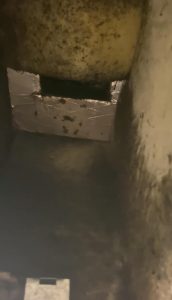


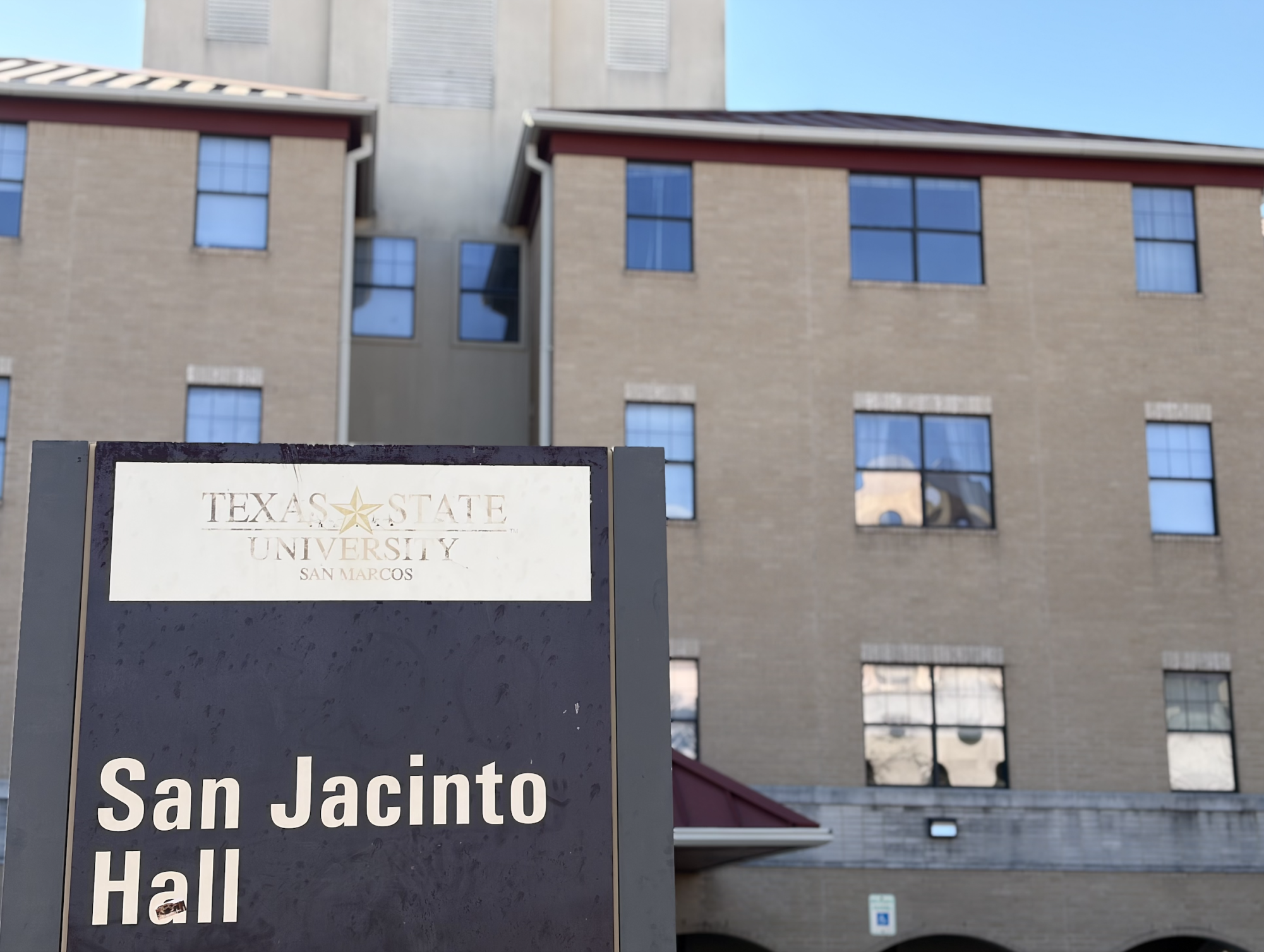
Six rooms tested positive for biological growth in San Jacinto Hall on March 20, including Stachybotrys, also known as black mold.
During this testing, Burch Environmental Services identified the growth of four fungal species using indoor air samples. According to their report, mold has likely been an ongoing problem in the hall and they strongly recommend that every suite be investigated for growth.
Texas State’s Director of Media Relations, Jayme Blaschke, wrote in an email that students in the rooms with confirmed biological growth are being relocated to temporary housing, and treatment began on Saturday, April 25.
Sadie Dotson, an early childhood education freshman, said she moved out of San Jacinto Hall in February due to mold-related health issues. She said she experienced brain fog, insomnia, migraines and nausea during her stay.
“You don’t get warned about being poisoned in the place you’ve been provided and are paying a significant amount of money to stay in,” Dotson said.
She said her health continued to decline the longer she stayed in the dorm.
“My white blood cell count was high because I’m fighting off an infection from the mold, and then my kidney levels were high because of mold poisoning… [my doctors] were like you should not be living there, and advised me to move,” Dotson said.
While students are not licensed to identify mold, over 120 maintenance work orders have addressed ‘biological growth,’ or what students have called “mold,” in San Jacinto Hall since May of 2025, according to documents acquired by The Star.
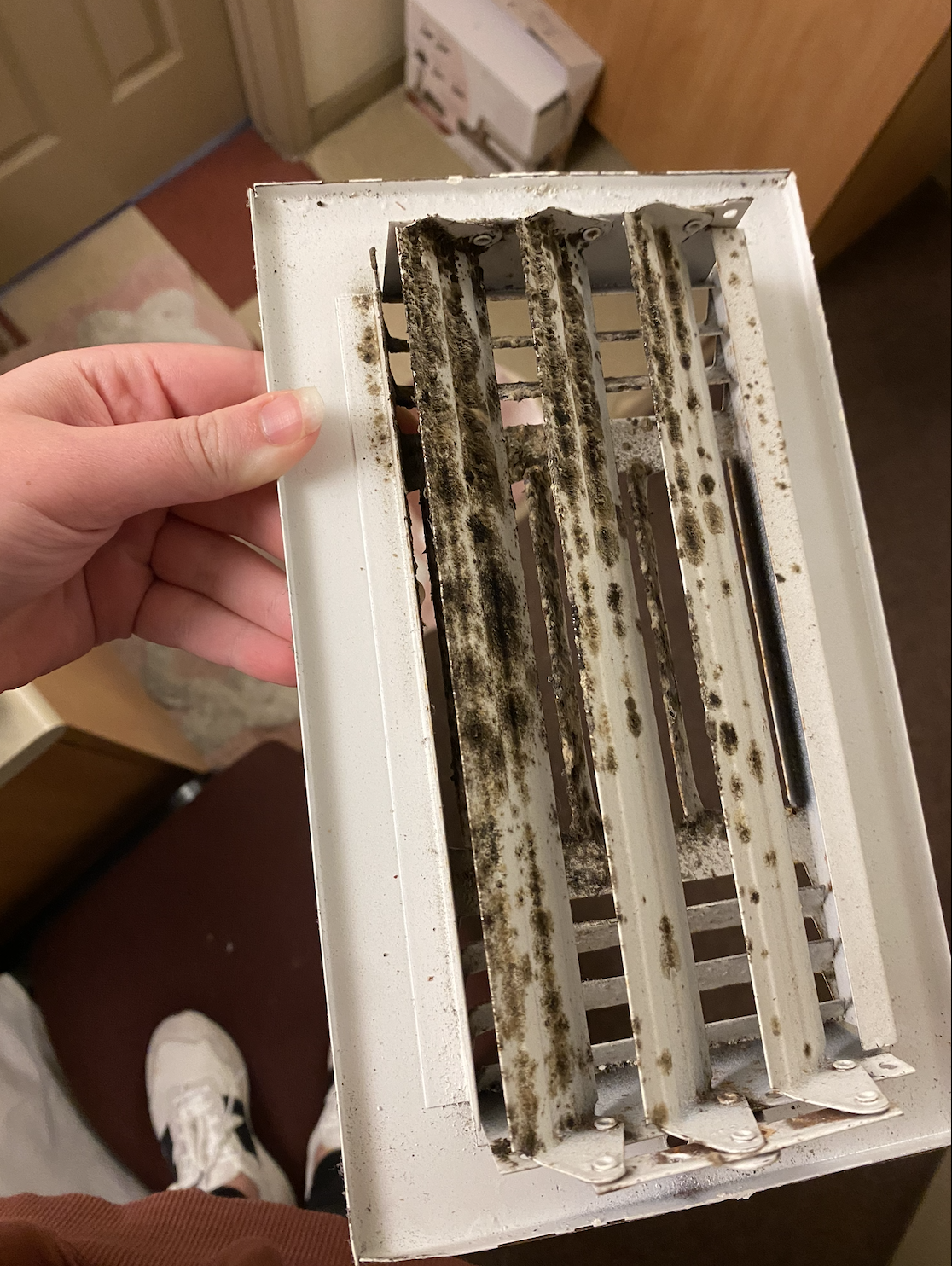
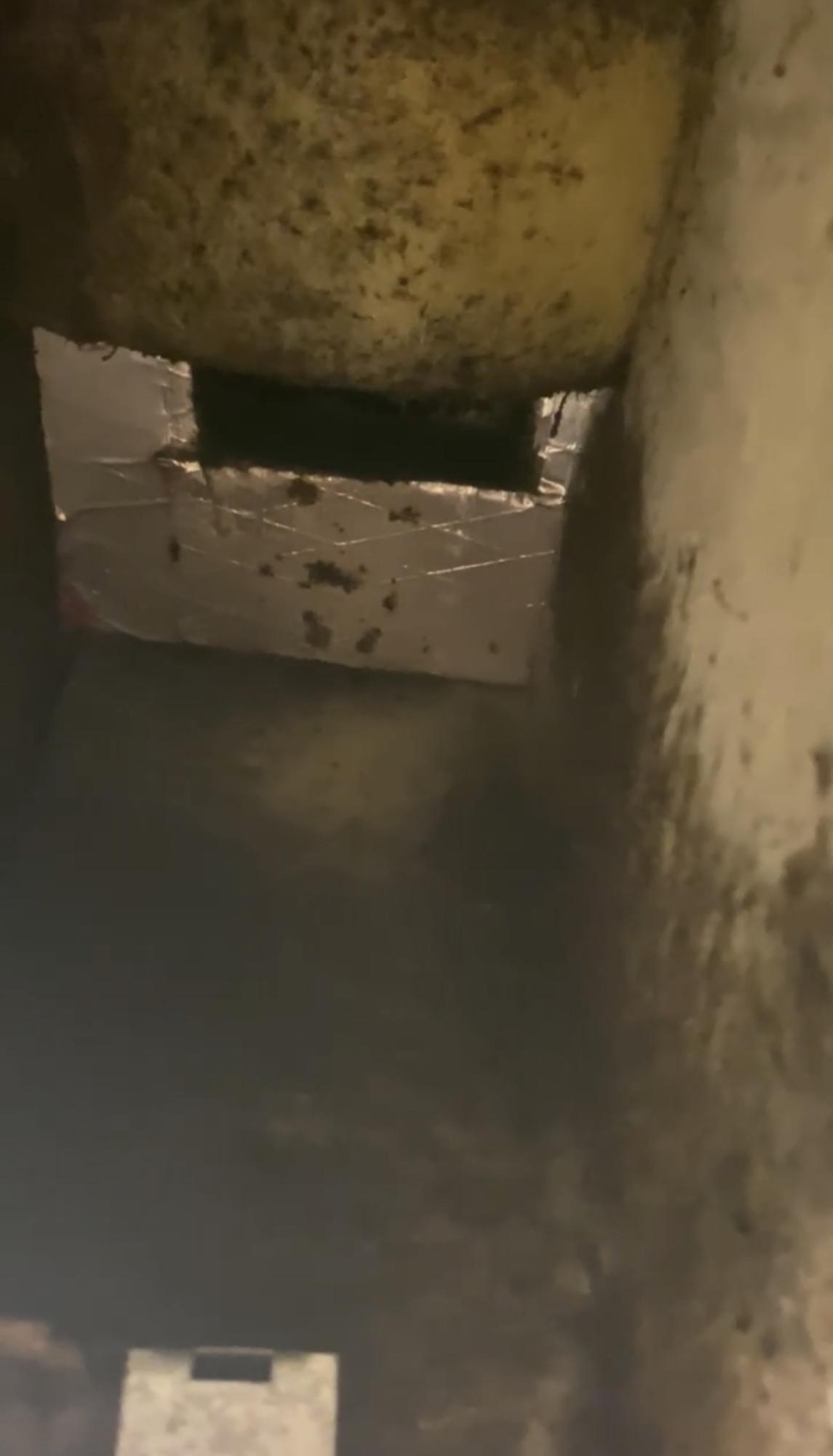
In these same requests, students in San Jacinto Hall complained of “immense amounts” of “disgusting” black growth clinging to their showers and vents, and “causing sickness.”
Central Texas has high humidity levels, making mold relatively common in indoor spaces, but if not properly removed and treated, some species can cause major health effects, said Rodney Rohdes, professor and program chair for Medical Laboratory Science.
“It can absolutely contribute to respiratory irritation, allergy symptoms and even worsening asthma. It can be problematic,” Rohdes said.
Licensed mold remediation contractor Ron, who asked to remain anonymous for job security, said to determine the best treatment for biological growth, it should first be tested in a laboratory.
However, Wendy McCoy, director of Environmental, Health, Safety, Risk, and Emergency Management at Texas State wrote in an email to The Star, that this testing is not mandated by the university and protocol is decided on a case-by-case basis. McCoy also declined to comment on how many dorm rooms have tested positive for biological growth.
Instead, the responsibility for asking for testing falls onto hall residents. Piper Simmons, a sophomore English major and former resident assistant (RA) at Bobcat Village, said she was never informed that she or her residents could ask the resident hall director for testing.
McCoy confirmed that RAs are not trained to look for or report mold; however, other housing and residential life staff are.
“I never once heard of any kind of [testing] going on. I never saw it done. It was never spoke of,” Simmons said. “I’ve only actually ever heard about it online, that that was even a thing you could do.”
Since the growth in her dorm wasn’t tested before treatment, according to Dotson, the university only used bleach sprays, scraped and repainted areas where growth was found.
Bleach and painting do not kill mold, licensed MRC Ron said.
“Once they test it and they find out that there is mold, they make an actual protocol to tell you how to get rid of the mold…I’ve never once had a MAC [mold assessment contractor] tell me I needed to paint over it. Ever,” Ron said.
As part of their housing contract, students agree to actions “necessary to prevent mold or mildew,” but repeated mold presence can be the result of facility malfunctions, not resident misuse, Ron said.
Each room in San Jacinto Hall has its own heating and ventilation, and air conditioning system (HVAC), which can be compromised by age or malfunctions.
This can lead to moisture getting into the equipment, and infected air could be distributing mold to each dorm room, Ron said.
“You’re blowing the [biological] growth that is growing in the ducting system, and so it starts to come out of the vents,” Ron said.
In repeated instances where mold continues to grow back in a home, Ron said there could be an underlying issue in the structure of the room that the owner is not addressing.
“What happens with growth is, you see it on one side, but that doesn’t mean that that’s the only place it is. It’s in between the walls typically… with [drywall] being porous, the State says that it’s best to remove it,” Ron said.
Students cannot seek treatment from mold remediation outside of the university, McCoy said. Students can submit maintenance requests if they have concerns to the ResLife portal or contact their hall’s resident director. Biological growth has also been confirmed in Lantana Hall, but no remediation efforts have been made known to The Star.
-
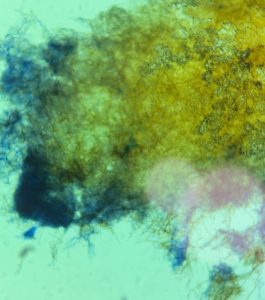
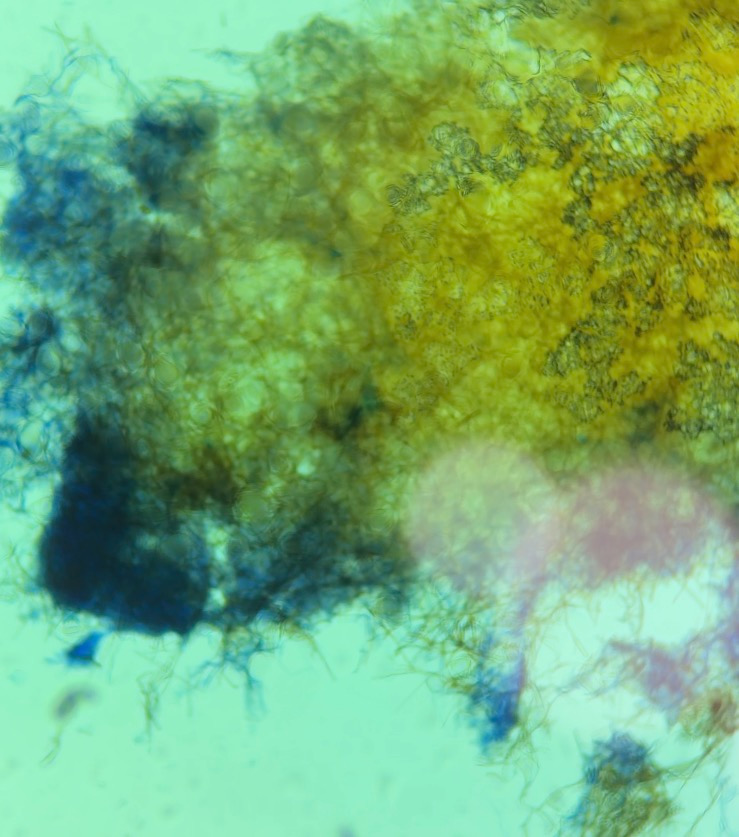
A sample of Curvalaria under a microscope, Tuesday April 28 ,2026. Curvalaria is one of the fungal species found in San Jacinto Hall, this sample was not taken from San Jacinto Hall.
-
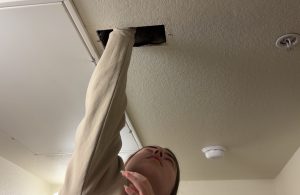
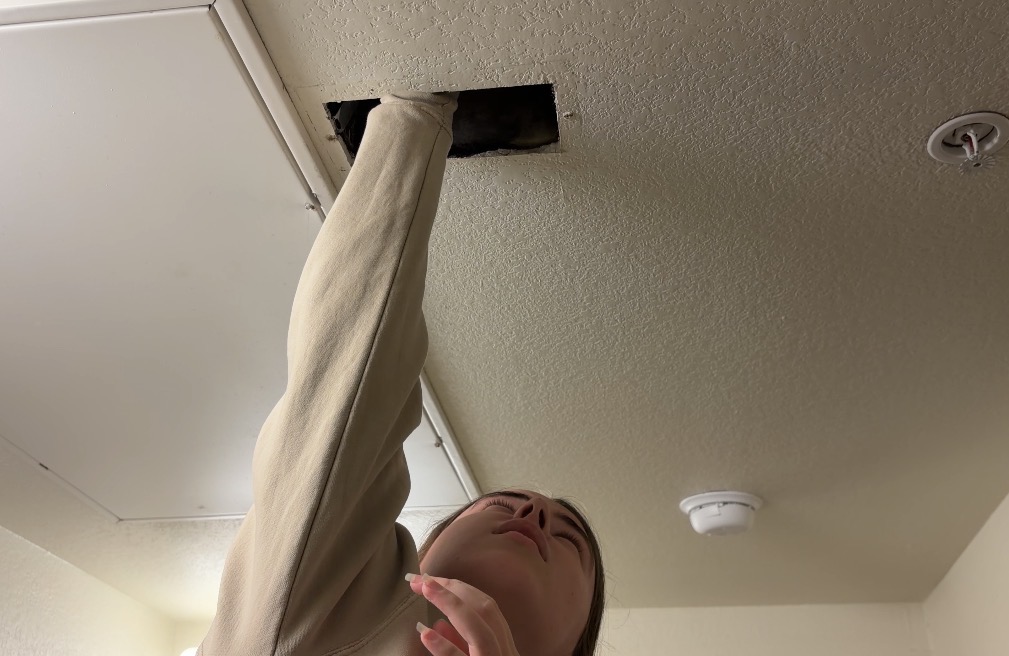
Early childhood education freshman Sadie Dotson examines her air vent for signs of biological growth, Thursday, Feb. 18, 2026, in San Jacinto Hall.
-
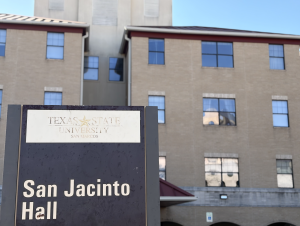
San Jacinto Hall photographed on Wednesday, Feb. 24, 2026, in San Marcos. This was before the 4 airborne fungal species were found.
-
The inside of Sadie Dotson’s air vent covered in biological growth, Wednesday, Jan. 21, 2026, in San Jacinto Hall. Courtesy of Sadie Dotson
-
Early childhood education freshman Sadie Dotson holds her biological growth-filled vent panel, Friday, Jan. 23, 2026, in her San Jacinto Hall dorm. Courtesy of Sadie Dotson.