

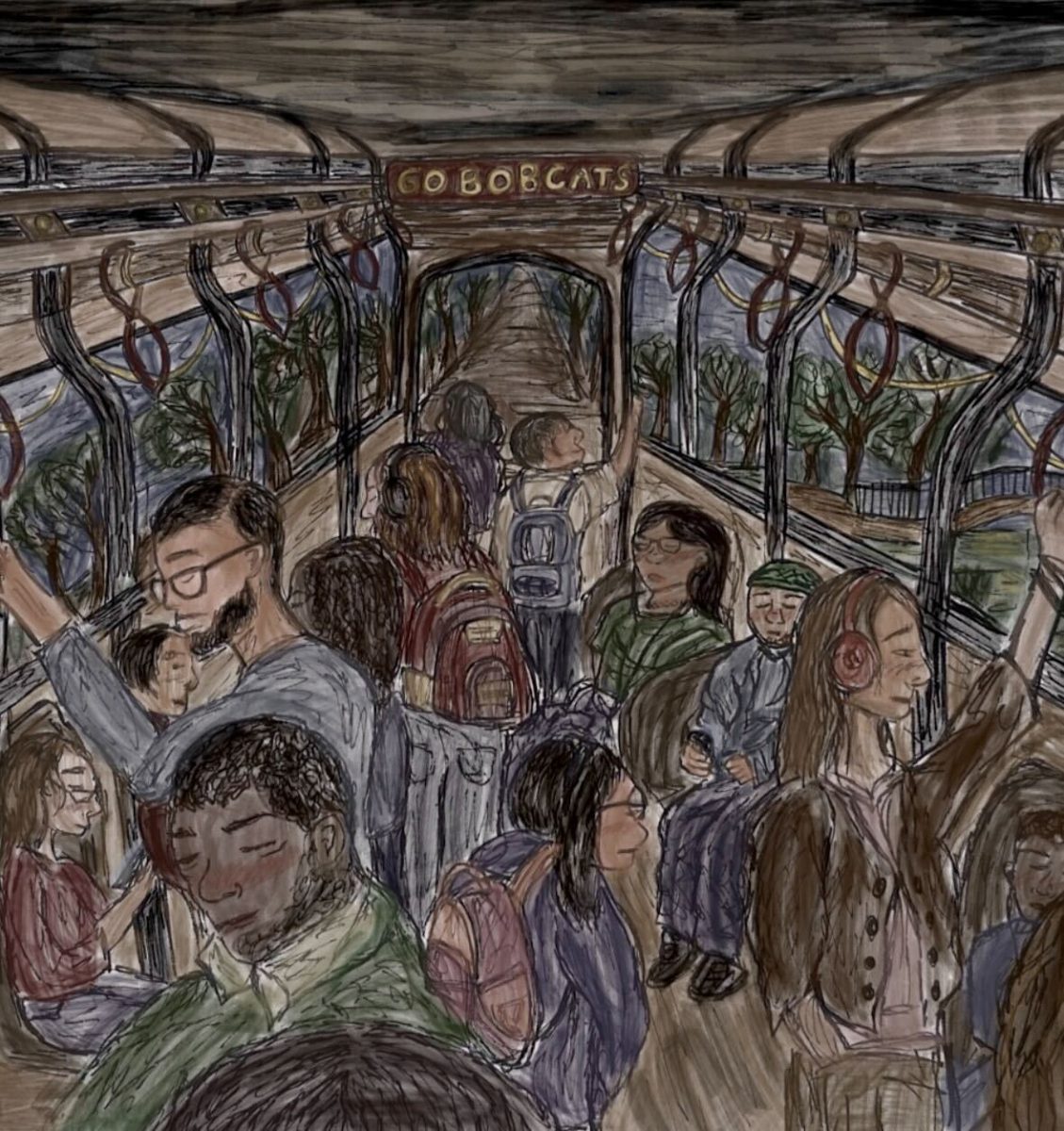
The Bobcat shuttle often frustrates students, but the system is far more organized than they might think.
By understanding how the shuttle works, students can use it efficiently. The shuttle is bound to get stuck in traffic but knowing the route and how much time is needed can help relieve stress.
For many students, the shuttle is their first encounter with public transportation. In Texas, public transit is often underfunded and underused, making it difficult for students to adapt quickly. According to PBS, public transit across the country has suffered significantly from inflation and funding cuts due to underutilization.
Rod Gonzales, manager of transit operations for the shuttle said the majority of students have only experienced ride-share programs or school buses prior to coming to campus.
“The only public transportation the majority of our people have done is Uber or Lyft,” Gonzales said. “The other half have only done the yellow school bus, where everybody must be seated and has seat belts.”
This can be confusing for students, especially freshmen. Navigating which routes to get on or issues with the shuttle app can be overwhelming. The shuttle is meant to benefit students when it is used accordingly. It can be a huge advantage for students without a car and can bypass parking issues on campus already.
Incorrectly timing the shuttle is frustrating, but giving enough time to the shuttle makes the timing easier to course correct. Ideally, students should arrive at the bus stop at least 45 minutes before the start of class according to the shuttle system. This makes time for any traffic delays, which are also built into the schedules of high-trafficked routes by spacing multiple buses on a route at the same time.
Once timing is figured out, understanding proper bus etiquette ensures a positive experience for peers.
Gonzales said students often follow other students’ lead when room is still available due to misconceptions about standing room and general etiquette on buses.
“What happens is, I see people saying, no, I refuse to stand,” Gonzales said. “It’s pretty much following the leader, and they say I’ll just wait for the next bus. It causes a domino effect. When, in reality, in public transportation, it’s perfectly okay to stand. I also see a lot of people wearing their backpacks, so it takes up two spots.”
While it might not always seem ideal, standing allows more students to make it to campus on time. Standing passengers can keep their backpack on, but for sitting passengers removing backpacks and placing them on the floor underneath the seat or on the rider’s lap helps maximize room for others.
However, some students might have disabilities, making standing difficult. The shuttle website states that all drivers are trained to assist anyone who is in need of extra assistance. Bus drivers may ask passengers to move to a different seat or stand if someone is in need of priority seating.
A full bus can seem daunting at first, but shuttles are meant to reach full capacity, using all available room. Handrails and straps located around the shuttle ensure that standing room is both safe and effective. If the bus is overcrowded, bus drivers communicate via radio, notifying other drivers on the route what to expect when they arrive at the stops.
Gonzales said routes with consistent high ridership are accommodated with the 60-ft buses meant to hold more passengers.
“Bobcat stadium was the through roof, and so we had to dedicate both 60-foot buses to that route,” Gonzales said. “That’s why we put five [buses] on Mill Street, because it was the number one highest hitting ridership.”
Navigating the shuttle isn’t always easy, but it can be a useful tool when used efficiently. Whether it’s leaving 45 minutes early, making room for a disabled peer or simply holding a backpack, students can make the shuttle a lot less frustrating and improve their experience.
-Shar Kiefer is a political science junior
The University Star welcomes Letters to the Editor from its readers. All submissions are reviewed and considered by the Editor in Chief and Opinions Editor for publication. Not all letters are guaranteed for publication.