

The Department of Education reclassified what degrees are considered professional degrees, set to begin July 1, 2026, imposing a loan cap that has raised concerns for students pursuing graduate nursing programs.
The One Big Beautiful Bill Act redefined which professional degrees, or graduate degrees, qualify for higher federal loan amounts. The Department of Education lists 11 professional degrees for which students can borrow up to $50,000 annually for a maximum of four years, whereas other graduate programs are limited to borrowing $20,500 per year.
The 11 secondary degrees classified as professional are: pharmacy, dentistry, veterinary medicine, chiropractic, law, medicine, optometry, osteopathic medicine, podiatry and theology.
Tracey Smith, Doctor of Nursing Practice (DNP) program director and clinical associate professor, said students who are aspiring to get a bachelor’s degree in nursing should be okay under this loan cap.
“What [the loan cap] doesn’t cover is housing, meals, living expenses, uniforms, transportation and all the other things that go into getting a degree,” Smith said.
Graduate student loans make up half of the $1.7 trillion federal student loans, according to the Department of Education. According to the U.S. Department of Education, the loan limits are specific to graduate programs and have no impact on undergraduate nursing programs.
Smith said one of the biggest problems with the redefinition would be the nursing pipeline, with master’s and doctoral nurses having limited funding.
“These are working nurses who are supporting the families, who have a job, who have gone back for their advanced degrees, who may not be able to do so because they can’t get [or] they’ve already maxed out their loans or they can’t get those loans that at the federal level, which are typically a lower interest rate,” Smith said.
The U.S. Department of Education stated that 95% of nursing students borrow below the annual loan limit.
On the Department of Education’s press release, the label “professional degree” does not mean nurses aren’t professionals, but is an umbrella term to distinguish loan limits amongst programs.
Smith said it is important to avoid the argument about the label, but to look at it specifically as loan limits.
According to Inside Higher Ed, the lifetime limit for all borrowers is $257,500, which includes any loans for a bachelor’s degree.
Cale Nedrow, a nursing junior, wrote in an email to The Star that classifying nursing degrees as unprofessional is discouraging for people aspiring to become nurses.
“There is no other degree that tests students’ emotional, physical and mental capabilities more than nursing. Just in the first semester of nursing school, my peers and I have seen patients code, patients preparing to say goodbye to family, patients who [can’t] move or walk, or talk…” Nedrow wrote.
Nedrow said he plan to obtain a Certified Registered Nurse Anesthetist (CRNA), which requires a doctorate.
“If I am unable to obtain federal loans for schooling, I will have no choice but to let go of this dream,” Nedrow wrote.
Smith said this redefinition could affect enrollment in master’s and doctoral programs, even though Texas State’s master’s program grew.
“I am concerned because I’m launching a doctoral program in the fall,” Smith said. “Are my students going to be able to afford the tuition, … What have they already spent [on] undergrad? At what point does it affect them?”
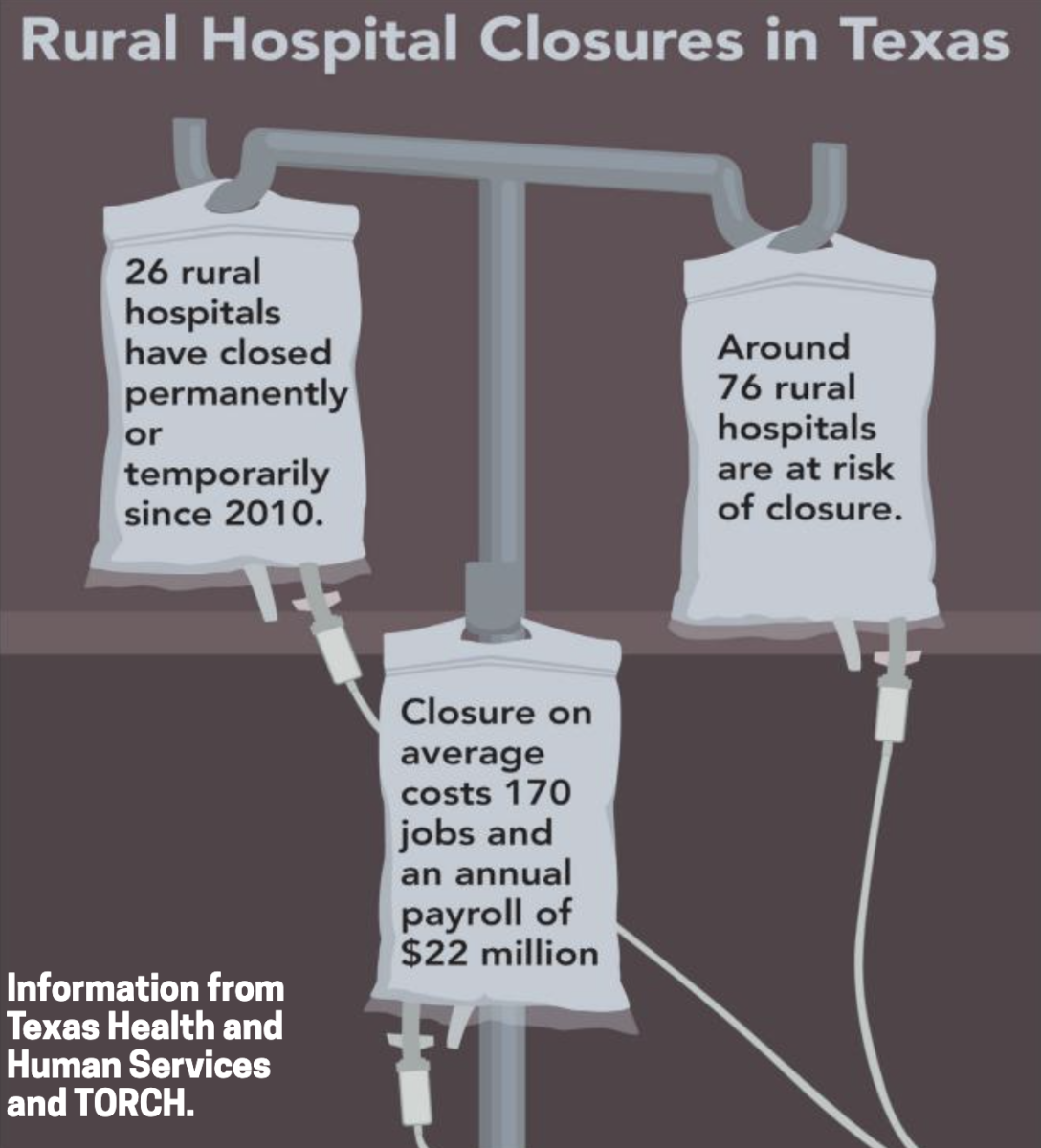
According to Smith, when nurses practice in rural areas, they receive federal loan forgiveness, due to practicing where patients need nurses the most. However, with the new rules and classification of nursing degrees, there is less incentive to go to rural areas without loan forgiveness.
Nurses can receive loan forgiveness through two federal programs, such as Public Service Loan Forgiveness (PSLF) for government and nonprofit work, and Nurse Corps Loan Repayment Program (LRP), where they serve in high-need areas; however, these options are usually limited to federal loan not private.
Smith said the loan cap could cause a shortage of nurse educators because a minimum of a master’s degree is required to teach a Bachelor of Science in Nursing (BSN).
“Nursing faculty is an aging profession, and we need more,” Smith said. “By not providing enough funding for those advanced degrees, we’re going to lose our pipeline of educators, and that’s going to reduce seats and programs for nurses, and that’s going to reduce care further and impact our nursing shortage.”
Natalie Griffin, a pre-nursing sophomore, said she wants to become a nurse educator once she retires, but is concerned she won’t be able to afford the secondary education.
“I know so many other people in my same position,” Griffin said.”Unless there’s more ability to access these degrees, it’s going to affect so many people, and I don’t care if it’s an economic advantage, because I feel like there’s more harm than good.”
140 lawmakers sent a letter on Dec. 12 to the Department of Education, urging them to add nursing to the list of professional degrees before it goes into effect. The redefinition of professional degrees is set to start July 1, 2026.