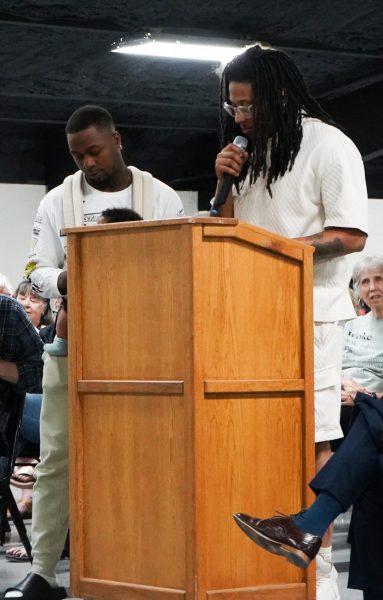


Texas government leaders met with residents to discuss proposed congressional redistricting and its impacts on Hays County.
At 4:30 p.m. on Aug. 2 at Cuauhtemoc Hall, Texas State Rep. Erin Zwiener (D-Driftwood) and Congressman Joaquin Castro (D-San Antonio) held a town hall meeting about redistricting and heard residents’ concerns about it.
Currently, most of Hays County is in Congressional District (CD) 21, which is represented by Republican Rep. Chip Roy. San Marcos, Kyle, Uhland and Niederwald are in CD 35, which is represented by Democrat Rep. Greg Casar.
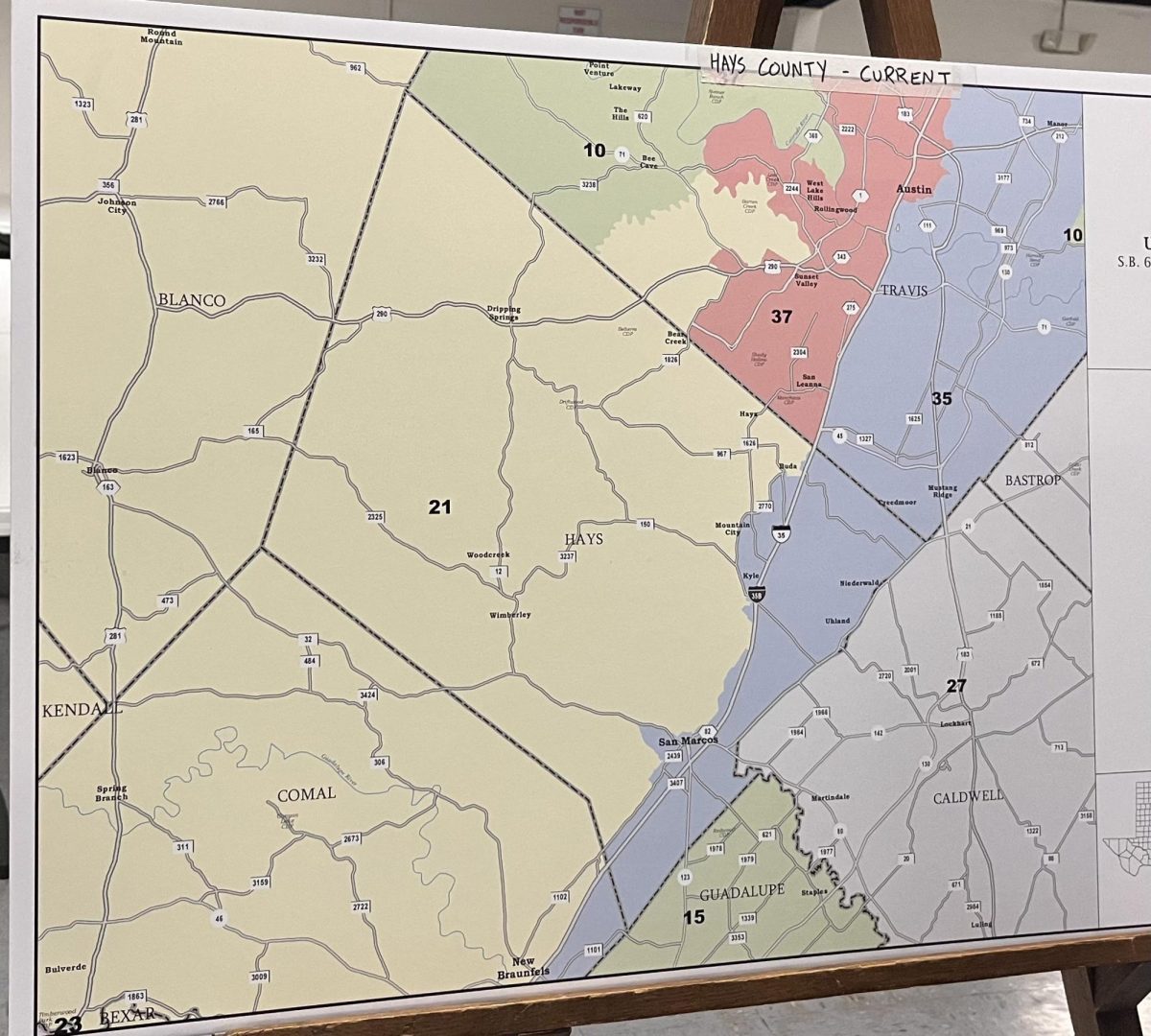
Under the proposed redistricting, San Marcos would be moved to CD 21, which goes as far west as Real County (about 150 miles from San Marcos). Kyle, Buda and other eastern Hays County towns would move to CD 27, which goes as far south as Corpus Christi (about 200 miles from Hays County) and is represented by Republican Michael Cloud. Both 21 and 27 normally vote Republican, while 35 votes Democrat. This means San Marcos would move from a Democrat district to a Republican one, essentially eliminating a Democrat congressman.
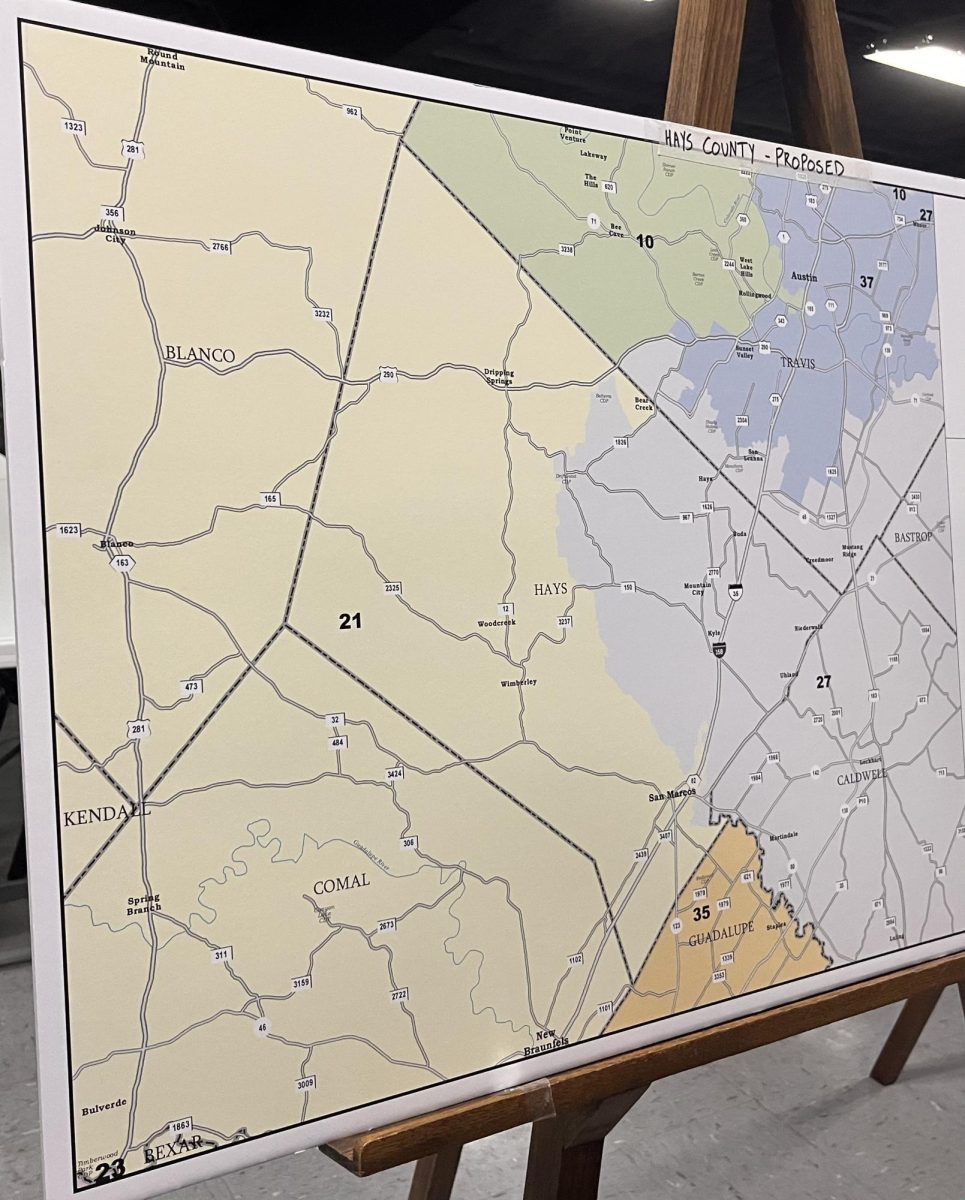
Zwiener said CD 35 is a historically important district as it serves as a minority opportunity district, which ensures the minority communities in the district have the opportunity to elect the candidate of its choice.
“San Marcos, all of it including this historic Hispanic community, is going to be folded into CD 21 which will only be 32% Hispanic and over 60% white,” Zwiener said. “The African American population will go from 13% to 8%, so both of those communities are going to experience a marked decrease in power.”
Castro said redistricting will eliminate some of Texas’s minority opportunity districts, like CD 35, which violates the Voting Rights Act.
“It’s in respect for the fact that the communities make up such a large percentage of a particular area and under the Voting Rights Act, they should have an opportunity to vote on who they want,” Castro said. “Well, this decimates that, and now the Supreme Court is taking up a case that would even further decimate it; they’re taking up a case to disallow any consideration, essentially, of Latino or African American voters.”
Daniel Ayala, president of the Texas Environmental Caucus and San Marcos resident, said redistricting will also negatively impact communities of color environmentally.
“The communities that endure the greatest exposure to cancer risk, toxic respiratory hazards, wastewater discharge, particulate matter and other risks are poor communities and communities of color,” Ayala said. “Now, these maps are going to make sure these communities don’t get a say on who represents them and who makes the correct choices for their own health.”
Additionally, Zwiener is concerned about the Hays County towns moving to CD 27, as she believes the new district is too large and will cause these towns to be alienated from the likes of Corpus Christi.
“The electoral weight of that district is around Victoria and Corpus Christi… that have very different economies, very different communities than ours,” Zwiener said. “Again, it is not a minority opportunity district. It will be weakening the voice of our communities of color, but honestly, it will be [seen] as a fringe community in this district that will be very easy for an elected official to ignore.”
Zwiener said Texas is redistricting at an irregular time. Normally, Texas redistricts every 10 years after the U.S. Census; however, the next census is not until 2030, but government leaders are still pushing for redistricting now.
Amanda Rodriguez, San Marcos Place 6 city council member, believes redistricting right now will have a serious impact that will take decades to undo.
“There’s many things that the state legislature does that all of us would probably agree harm people,” Rodriguez said. “I’m not talking about a year of harm. I’m not talking about a decade of harm; it’s sustaining harm. You’re talking generations of harm that to undo, many of us would never see in our lifetime.”
Castro said just some of the issues that can be affected are education, healthcare, job opportunities, infrastructure and transportation.
“It matters a lot who your member of Congress is and whether they’re accessible,” Castro said. “This is going to be completely disruptive and also divisive in all of this process.”
On Aug. 2, the proposed map was voted out of the House Select Committee on Congressional Redistricting; now, Castro said it will move to the state House floor and get voted on. After it’s voted on in the House and Senate, it will move to Gov. Greg Abbott’s desk, who would have to pass it.
Zwiener and Castro both recommend that people who are concerned about redistricting to contact members of the state legislature and Abbott.