

Supplemental Nutrition Assistance Program (SNAP) users in San Marcos are rethinking their grocery budgets after Texas banned the purchase of candy and sugary drinks.
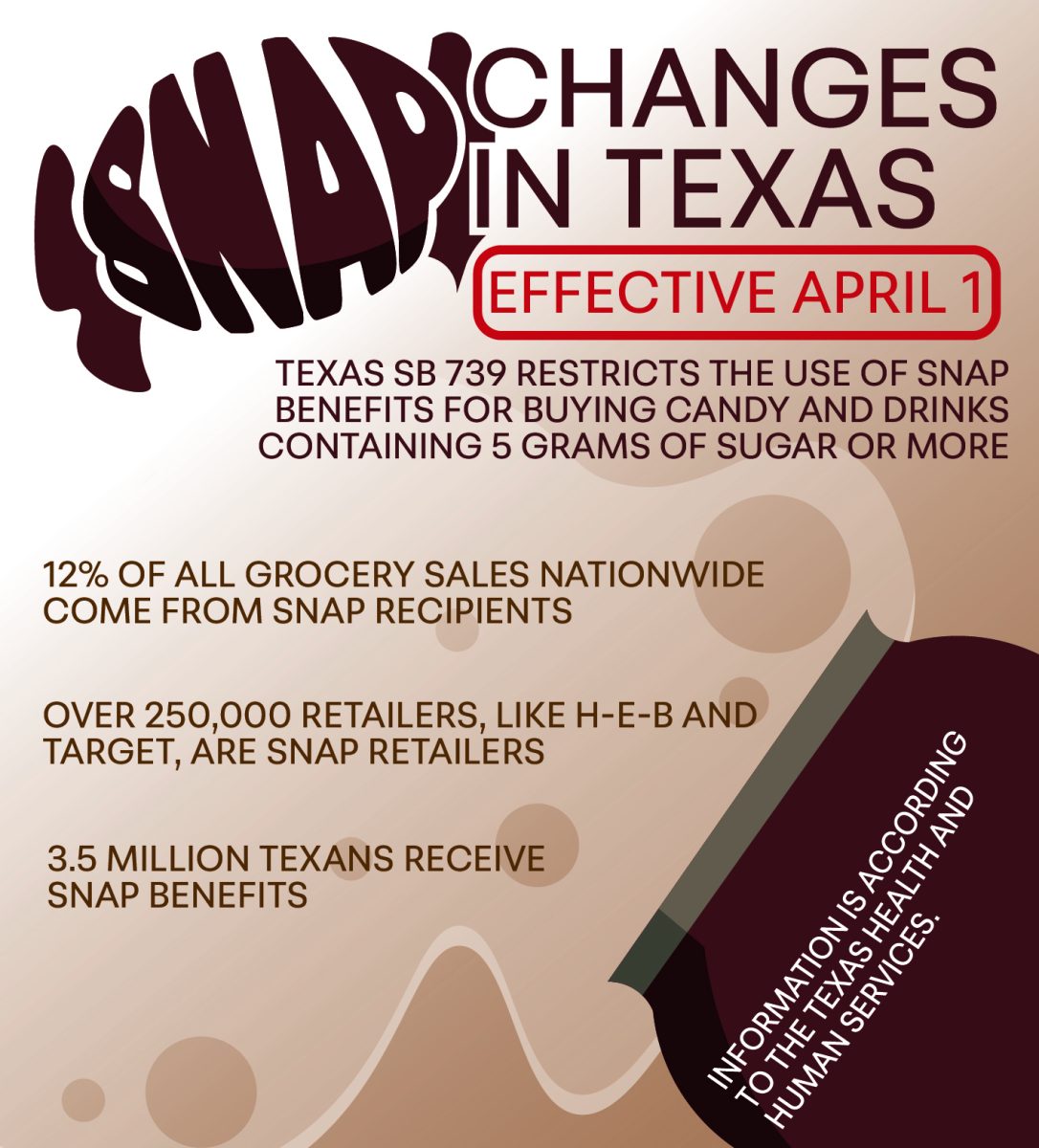
As of April 1, Texas SNAP recipients can no longer use their Lone Star Cards to purchase certain candies and beverages with more than five grams of added sugar, following the new restrictions under Senate Bill 379.
Gov. Greg Abbott said in a press release on August 2025, the bill targets “taxpayer-funded junk food,” by prohibiting items such as candy bars, gum, taffy, candied nuts and fruit, chocolate, yogurt and caramel coated snacks, sodas, sports drinks and other beverages.
“By restricting unhealthy foods from being purchased with SNAP benefits, Texas can help ensure the health and well-being of Texans,” Abbott stated in the press release.
According to Texas Health and Human Services, more than 3.5 million Texans rely on SNAP benefits as of 2025. Under the new restrictions, households can no longer use SNAP to purchase items like candy and sugary drinks, meaning families must either pay out of pocket for those products or adjust grocery lists to stay within their monthly budgets.
Jasmine Rivera, psychology sophomore, said her family has depended on SNAP for years. Her mother is fully disabled and unable to work, and she relies on government assistance for both food and housing.
Rivera said because she lives on campus, her mother often helps provide groceries by purchasing essentials like bread, milk, cereal, fruits, vegetables and meat with her SNAP card.
“My mom has a disability, so she’s not allowed to work and relies on a check that’s only about $1,000,” Rivera said. “That money helps us purchase food, drinks and snacks, because she’s very limited on money and still has other bills like rent.”
Although sweets are not part of their regular shopping trips, Rivera’s family occasionally uses SNAP to buy sodas, which are now restricted.
”It’s tough when my mom is on a limited income,” Rivera said. “Now we have to pay out of pocket just to enjoy something small once in a while.”
Rivera said rising grocery costs make it harder for families like hers to get by, especially when living with a disability. She said people shouldn’t judge others for getting assistance from the government.
According to Rivera, the SNAP changes have not drastically altered her family’s overall shopping habits, but she questions whether the policy was necessary in the first place.
Food and health experts like Celia Cole, CEO of Feeding Texas, also question whether the policy will actually change eating behavior or simply shift how families spend their limited cash.
“It’s important to consider how changes to eligibility or benefits may impact access to food for millions of Texans who turn to the program to help bridge gaps in their household food budget,” Cole said in a March press release.
Lou Ruiz, biology senior, said she began receiving SNAP benefits last May, and they are now essential to her daily life. In Ruiz’s experience, balancing school, teaching a lab and volunteering makes it a struggle to afford rent, gas and groceries.
”We aren’t poor people,” Ruiz said. “Sometimes everyone just needs a little help and that’s okay.”
While Ruiz said she supports encouraging healthier eating, especially for children, she admitted the new restrictions have had some personal downsides.
“I used to get Monsters and Celsius, but now I can’t,” Ruiz said. “I can’t even get the zero-sugar options … Sometimes I need the caffeine to get me through the day.”
Ruiz said access to SNAP has been life-changing for her. Before enrolling in the program, she often ate one meal a day or less while trying to cover basic expenses.
“I was able to keep my grades up, but I didn’t feel good just eating once a day,” Ruiz said. “No one should have to go through that or feel that way.”
Ruiz said she was arrested last year for stealing cat food, before she knew about SNAP benefits, because she was so desperate for food for herself and her cat.
“I learned instantly that I can’t steal, I don’t want to steal. I paid my dues, did my community service and also learned about SNAP,” Ruiz said. “Now I don’t have to steal just to eat, and my cat and I are doing great.”
Texans who need help affording food can call 2-1-1 or visit 211texas.org for free, confidential help connecting to local food banks, meal programs and other resources across Texas.
Texas State University students looking for food assistance can also access Bobcat Bounty from 4:30 to 6:30 p.m. on Mondays in the Family Consumer Sciences building, in room 187.