
The Department of Defense awarded the anthropology department a grant, which allowed 11 graduate and doctoral students to fly to France, in hopes of uncovering and returning home the remains of four missing crewmen from a crashed B-17 World War II flight.
The department received a $280,000 grant from the Defense POW/MIA Accounting Agency (DPAA), an agency within the Department of Defense with the mission to “provide the fullest possible accounting for our missing personnel to their families and the nation,” according to its website
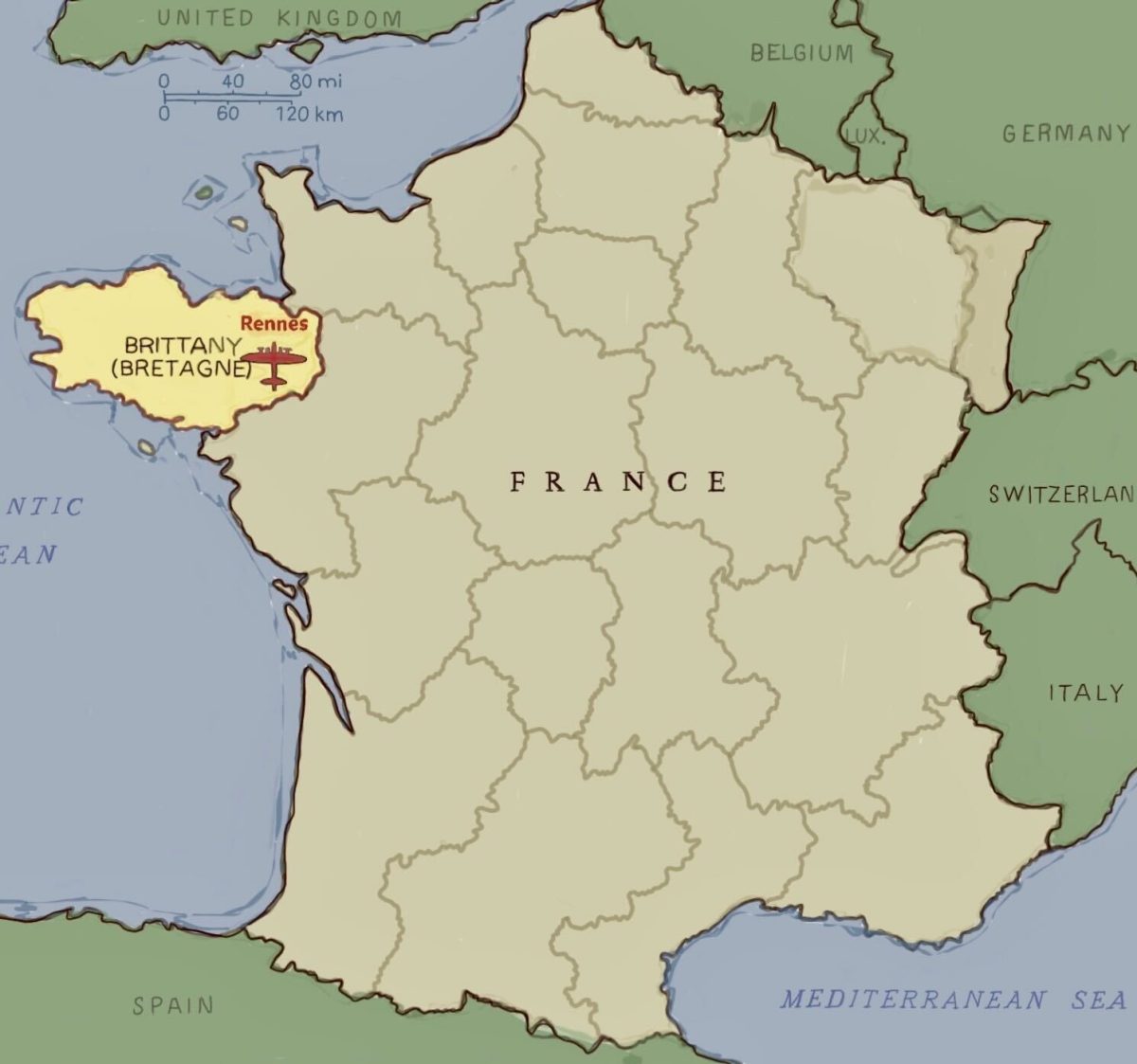
The grant was spearheaded by Todd Ahlman, director of the Center for Archaeological Studies, to enable a team of students to travel to an area near Rennes, France, for four weeks in summer 2025. They are expected to return to the project in July 2026, but there are ongoing budget negotiations regarding funding for the second year of the grant.
“DPAA is the military, so there is a very regimented process, there’s a lot of record keeping that has to happen,” Ahlman said. “One, because it’s the military, but also to be accountable to the families.”
The group is working to uncover a B-17 bomber plane that went down in 1943 the European theater, which was the area of Europe involved in World War II, after an air battle with the Nazi German Luftwaffe.
Ashley McKeown, a professor of instruction and one of the participants of the project, said going to France made her realize how powerful World War II was, with how the French still live with the effects of the Nazi occupation to this day and how different it was for people in America.
“It still informs how [locals] live and think … to hear them talk about what the U.S. did during World War II to free them from Nazi occupation, was really moving,” McKeown said.
This is the first time Texas State has partnered with the DPAA, making it the first Texas university to receive a DPAA grant for terrestrial, or above-ground, anthropology.
“This is taking it to a whole new level, going out into the field and representing Texas State in a foreign country, doing this level of work,” McKeown said. “It’s designed to be training for our graduate students, and giving them the practical training and skills that might help them land a job down the road is really critical.”
Last summer, the team included 11 students, nine crew members, two student field chiefs and a recent graduate who was the team’s interpreter.
“I really support the work that the DPAA does; it was amazing to get to be a part of that,” Rebekah Stowe, a forensic anthropology student who went with the team in summer 2025, said.
Ahlman said the project is expected to be completed in three years, but it is dependent on the work and findings. Information about the flight history, crew, and status of the project is limited, as it is ongoing with DPAA.
“I think this is wonderful work, and I’m very glad that the DPAA is still investing in World War II’s missing and unaccounted for service people,” McKeown said.