
A physics professor and speech advocacy group are alleging Texas State is violating freedom of speech after making the professor remove a sign from his office door.
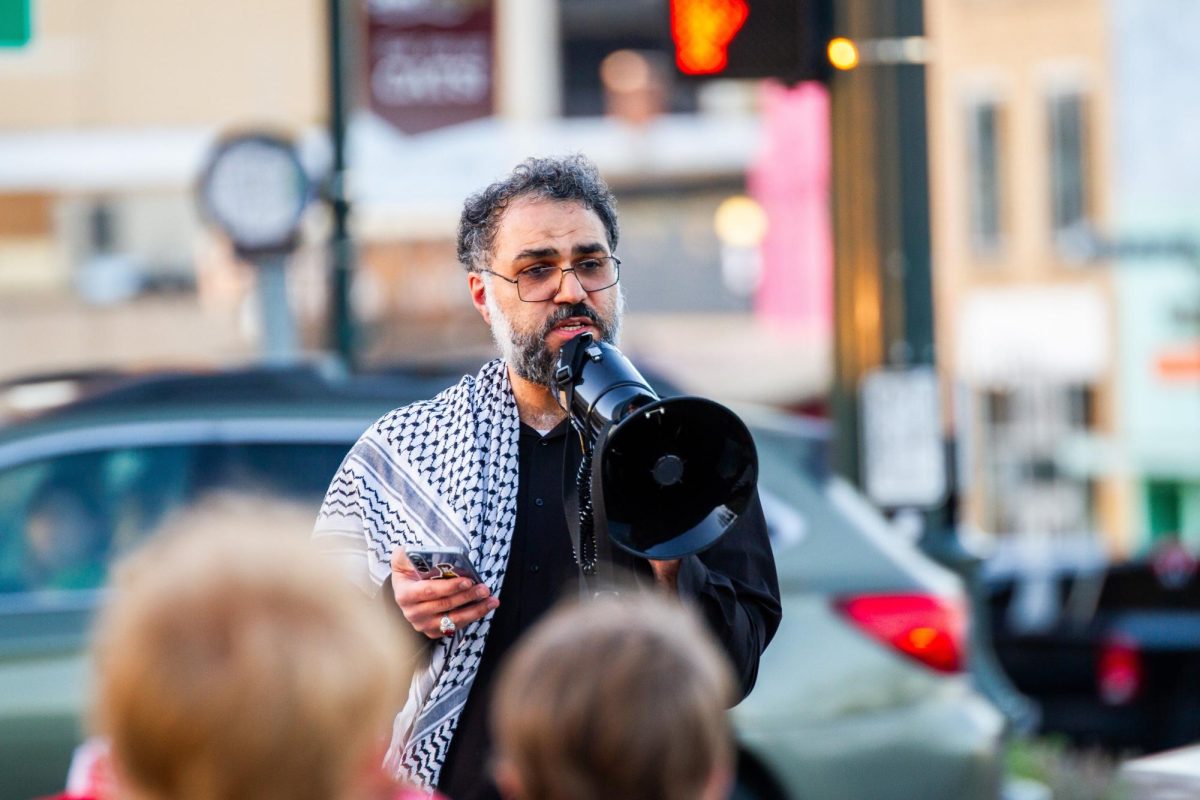
Assistant Professor of Instruction of Physics Saeed Moshfegh claimed he was threatened with disciplinary action after hanging a sign on his door declaring his office as a “safe space for immigrants,” and a second sign declaring it a “safe space for immigrant students.” The Foundation for Individual Rights and Expression (FIRE) sent a letter to Texas State University condemning the incident, but received no response.
According to the letter, Moshfegh did not receive written reprimand because “an unknown individual” removed the second sign from his door.
“One day my department chair knocked on my door and said ‘you can’t have this sign on your door,'” Moshfegh said. “He said ‘oh because it is against the law.'”
According to Zach Green, director of faculty legal defense at FIRE, Moshfegh was accused of violating Senate Bill 4, a 2017 Texas law. SB 4 prohibits local governments and government organizations from establishing any sanctuary policies for immigrants.
In the letter from FIRE, Texas State Provost Pranesh Aswath said Moshfegh’s sign violated the university’s legal obligation to not “adopt, enforce, or endorse a policy under which the entity or its officers prohibit or materially limit cooperation with a federal immigration enforcement officer.”
Green said SB 4 does not apply to Moshfegh’s situation, as one person displaying a sign cannot be interpreted as the entire university establishing a sanctuary policy.
“We think the university is misinterpreting state law to punish a professor for political speech,” Green said. “Even if the state law applied here, the First Amendment is the supreme law of the land.”
According to Green, universities can use time, place and manner restrictions to determine how speech is expressed. Time, place and manner restrictions allow government entities to restrict speech as long as it serves a significant government interest, such as public safety, but it must be done in a content neutral way.
Along with violating state law, Moshfegh alleges he was told his sign was exclusionary and violated the university’s discrimination policies. However, Moshfegh noted that the university does not require other signs, such as LGBTQIA+ flags and ally signs to be removed from doors and nameplates.
Mosfegh said he didn’t understand how declaring his office a “safe space” could violate either state law or university policies.
“University policy should be that this is a safe space for students,” Moshfegh said. “I’m not saying that this office is something that it’s not supposed to be.”
According to Moshfegh, actions of the university such as forcing him to remove his sign, could indicate to immigrant and international students that Texas State is not safe for them.
“The university doesn’t say openly that this is not the safe space, but when they try to punish faculty that are trying to support the immigrant students and saying that my office is safe space for you … ” Moshfegh said. “The immigrant students are feeling afraid. There is fear among them.”
“I don’t think that the university has to have the right to tell … what you can say and what you cannot say,” Moshfegh said.
The first sign Moshfegh posted on his door was given to him by the Texas State Young Democratic Socialists of America (YDSA).

According to Livy Rocha, reproductive chair for YDSA, Moshfegh is not the only professor who has received pushback for posting one of their signs.
“A lot of professors, especially newer ones, are like, ‘Hey, I agree with you guys, but I don’t want to risk anything with on my end and on the administration end.’ Which is saddening, because you have the support, but they can’t do anything about it, especially since [the] Provost has such influence,” Rocha said.
Unlike Moshfegh, Rocha said YDSA has tried to talk to the Provost about ways they can change the wording or design of the signs, but have not received any responses.
“We have been thinking about getting a meeting with Provost, but, I mean, that’s really difficult to do, even difficult to even just email them,” Rocha said. “I don’t know where we’re gonna go forward with this.”
YDSA is currently working to gather signatures from students with the goal of making Texas State a sanctuary campus.
Moshfegh and Green claimed to have received no response from FIRE’s letter to Texas State President Kelly Damphousse. The university declined to comment about the incident with Moshfegh, saying it’s against policy to comment on personnel decisions.