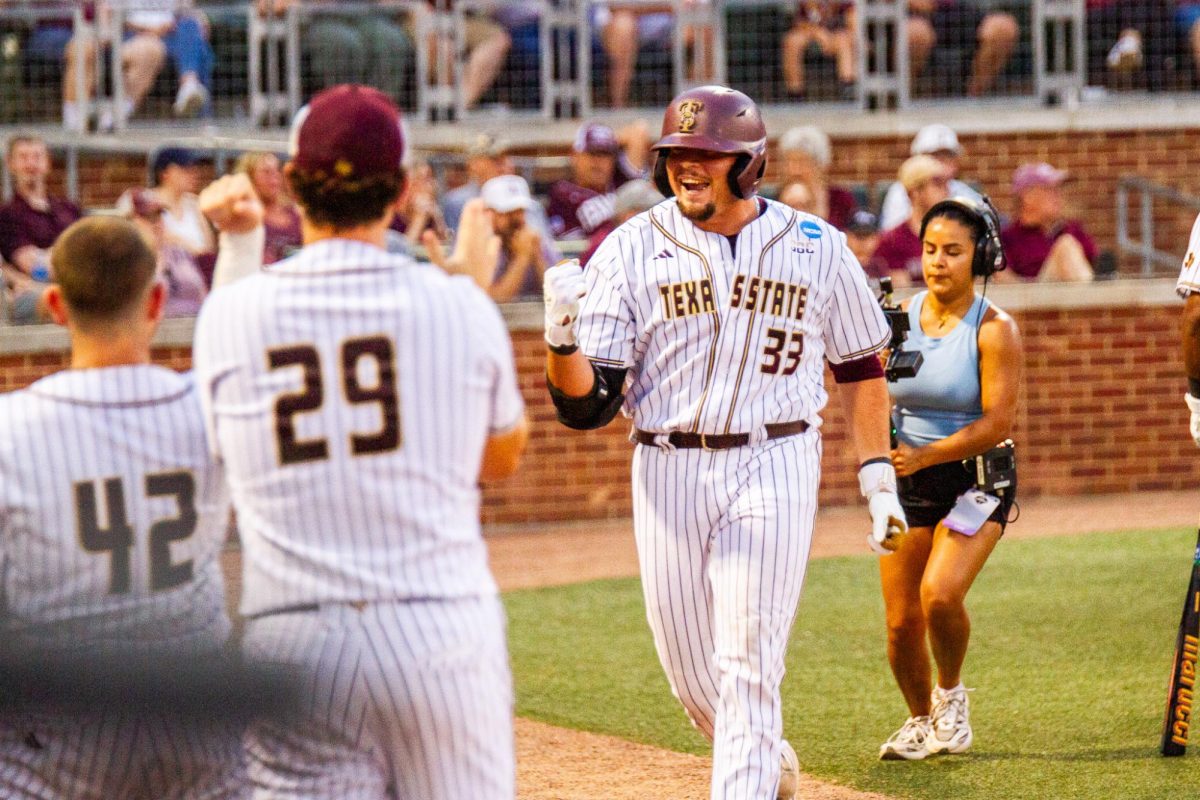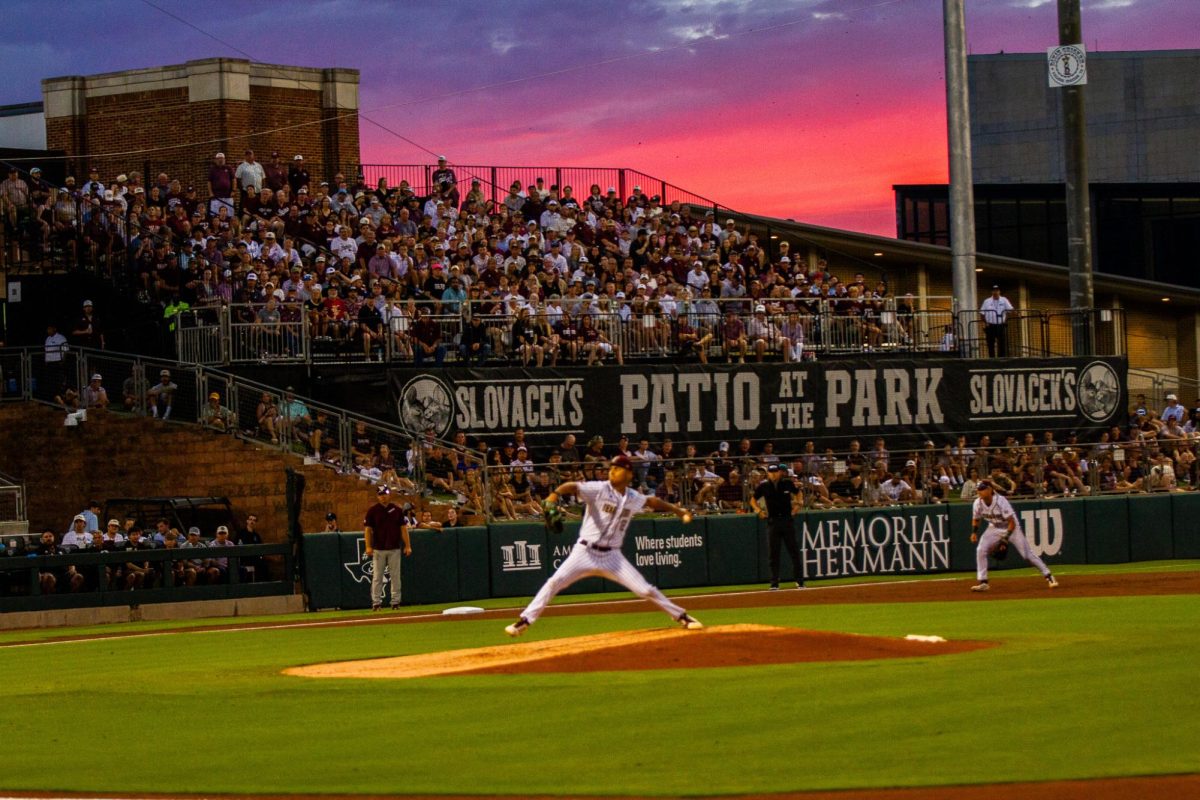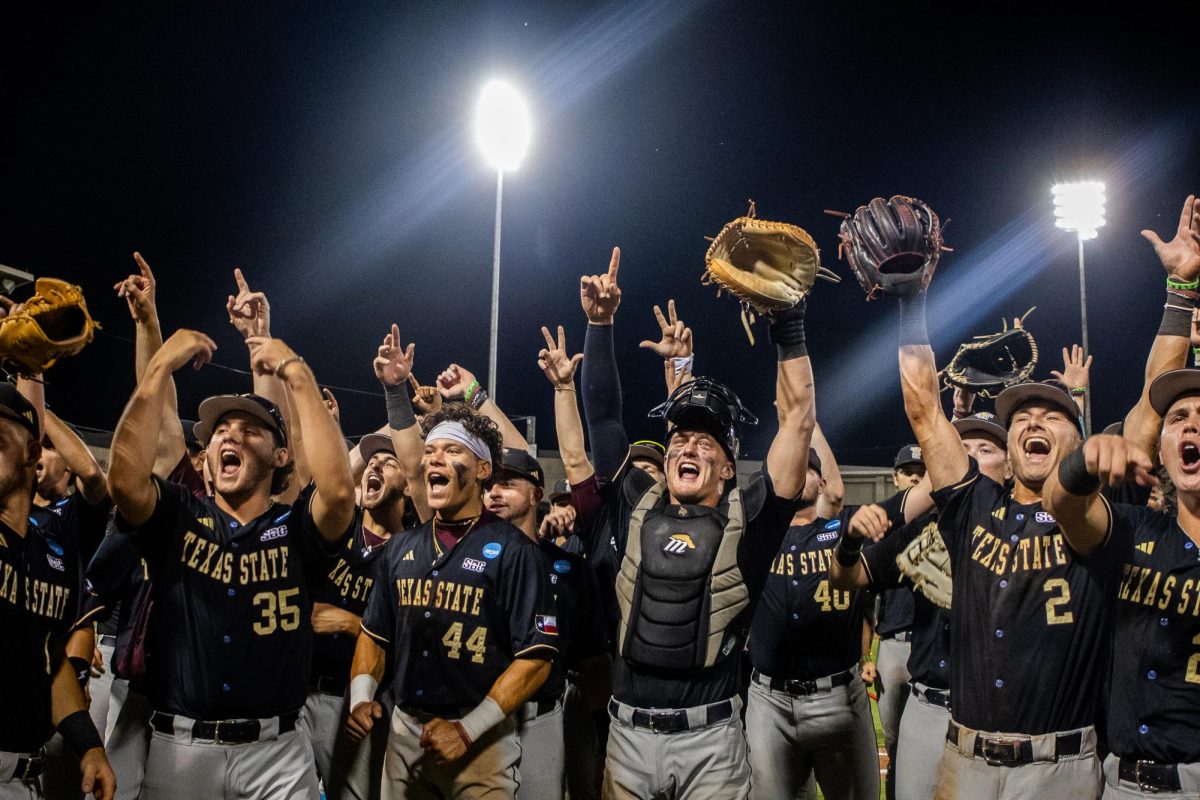


The journey to the Men’s College World Series in Omaha, Nebraska is just beginning for the Texas State Bobcats after they were one of 64 teams to be slotted into the bracket for the 2026 NCAA Division I Baseball Championship. They landed in the College Station Regional that will take place from Friday, May 29 to either Sunday, May 31 or a potential winner-take-all game on Monday, June 1 in Olsen Field at Blue Bell Park.
The Bobcats will be joined by the region’s top seed, No. 12 Texas A&M, the University of Southern California as the second seed, with Texas State following suit as the third seed and finally, Lamar as the fourth seed.
Here’s a closer look at the teams and the overall bracket in the College Station Regional.
No. 1 seed, Texas A&M Aggies (39-14)
After missing the NCAA Tournament last year entirely in year one of head coach Michael Earley, the Aggies bounced back and finished third in the Southeastern Conference and were one-and-done in the SEC tournament after a 7-0 loss in the quarterfinals to Auburn. While Texas A&M still earned the right to host a regional, an early elimination dropped them from a potential top eight seed that would’ve gave them home field advantage in the Super Regionals.
The Aggies are known for being a high-scoring offense, averaging nine runs a game alongside a commanding .421 on-base percentage, tied for 14th overall in the nation.
They are one of the few teams ahead of the Bobcats in terms of the long ball with 114 home runs, good for sixth in the nation. The offense is led by a pair of juniors outfielders in Caden Sorrell and Gavin Grahovac, who combine for 42 home runs.
The pitching staff is headlined by sophomore Aiden Sims, who is by far their best pitcher on the staff, as noted with his 3.84 earned run average (ERA), which is the lowest among all their starting pitching. To add on, he has the second most strikeouts on the team with 73 with opposing batters averaging .213 against him across 68 innings.
Texas State and Texas A&M are more than familiar with each other this season as the two played against one another twice in a home-and-home. While the Aggies took the first match-up 9-6 at Olsen Field on March 17, the ‘Cats got their get-back on April 7 and exerted their revenge with a 9-8 statement victory while christening the newly renamed Irvine-Rasmussen Ballpark.
Across the rest of the field, the Aggies have only played the Trojans once ever and beaten them in 2024 with a neutral-site 9-3 blowout win at Globe Life Field in Arlington, Texas. They played against Lamar earlier this season in their second midweek game of the year, run-ruling them with a 25-5 home victory.
No. 2 seed, USC Trojans (43-15)
The outlier in the Texas-majority regional, USC finished fourth in the Big 10 and was just one out away from playing in the conference title game before a three-run walk-off home run from No. 1 UCLA ended their conference title hopes.
The Trojan’s season is an interesting one to observe. They started dominating right out the gate, winning 19 straight games and a possessing a 32-1 home record that certainly helped contribute to them making their second consecutive regional appearance for the first time since 2001-02.
However, a 1-11 record against Quad 1 opponents and not maintaining that scorching success pushed them away just enough from hosting a regional despite possessing a top 10 RPI. Still, they are not a team to take lightly, especially given how far their pitching could take them.
They are led by arguably the best pitcher in the nation with junior Mason Edwards. The left hander was absolutely dominant in his 2026 campaign, leading the nation in strikeouts with 154, hits per nine (4.59) and strikeouts per nine (16.43) while possessing the second lowest ERA among all starters with 1.42 and also breaking the Big 10’s record for strikeouts in conference play. All of this led to him not just winning the Big 10 Pitcher of the Year, but also being one of 25 players to be a semifinalist for the Golden Spikes Award.
As a whole, the Trojans are top six in the nation in ERA with a 3.48 that includes multiple strong hurlers alongside Edwards, such as sophomores Grant Govel and Andrew Johnson and a respectable bullpen.
The offense is more middle-of-the-pack, with a team batting average of .273 though possessing multiple starters with an on-base-plus-slugging (OPS) above .900. They are led by senior right fielder Jack Basseer, who leads the team in batting average and OPS.
USC’s track record against teams in this regional consists of just one game. The Trojans have never played the Bobcats and Cardinals while playing Texas A&M just once and losing to them in 2024.
No. 3 seed, Texas State Bobcats (36-24)
Listed as one of the last four teams in to make the NCAA Tournament, Texas State’s whirlwind season included dominating stretches and a high-octane offense alongside points of time where an at-large bid seemed out of picture after a disastrous April that headlined with sophomore shortstop Dawson Park’s departure from the program at the beginning of May.
A late surge at the end of the season that had them finish sixth in the Sun Belt Conference and making the tournament semifinals before losing twice to Louisiana-Lafayette was just enough for the selection committee to get them in for the first time since the 2022 season alongside four other SBC programs.
The ‘Slam Marcos’ moniker came alive with a season that was filled with multiple offensive milestones, including being one of the best home run hitting teams in the country after smashing their previous single season program record of 87 by hitting an additional 24 home runs to total for 111. The offense features multiple batters that have hit double-digit home runs, led by junior first basemen Jaquae Stewart with 16.
Senior right fielder Rashawn Galloway is the teams most consistent hitter, leading with 83 hits alongside a batting average of .324 that includes 27 doubles, which is not only good for third in the nation among all batters but also smashed a previous program record of 21 that was set in 2003.
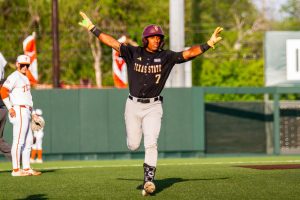
(Aiden Fritsche)
The pitching is more of a question mark. While the team features good arms such as freshman Wade Cooper and sophomore Cade Smith, the consistency of the staff is lopsided, added by the fact that the weekend rotation changed drastically mid-season that pushed the aforementioned pitchers into starting roles. With a staff ERA of 5.40, the Bobcats might need to rely on their potent offense to stand a chance in College Station.
Against the field, Texas State has some familiarity. They split a home-and-home with the hosting Aggies earlier this season and will play against Lamar for the first time in six years while opening their NCAA Tournament run with their first ever match-up against the Trojans.
No. 4 seed, Lamar Cardinals (34-25)
The Cardinals are the lone conference champion in this regional, as they were winners of six-straight games en-route to clinching the Southland Conference tournament title for the first time since 2010.
They enter the tournament with a strong one-two punch pitching duo featuring seniors Travis Lutz and Chris Olivier. Both were atop the Southland Conference in ERA as the lone starting pitchers within the conference to have an ERA below three, which helped fill their accolades as Lutz received the conference’s Newcomer of the Year Award and Olivier headlining as being the Southland’s Pitcher of the Year.
Pitching is no doubt their strong suit, but if they want to stand a chance at winning the regional, their offense will need to take a step up and continue the momentum they had from the conference tournament and keep their focus on the games ahead, especially after 10-year head coach Will Davis was poached by the University of Houston on May 26.
While the offense was good in a hitter-friendly esque conference that saw the Southland have seven out of it’s 11 schools have a batting average above .270, their best hitters all have an OPS ranging throughout the .800’s. They did lead the conference in hits with 551, but ranks seventh in runs with 328.
Their most consistent bat is senior shortstop A.J. Taylor, who was featured on the All-Southland First Team and All-Defensive Team. Taylor has started in every game the Cardinals played this season, leading the team with seven home runs alongside the second most doubles with 12 and third most hits on the team with 69 while posting a .297 batting average and .814 OPS.
Against the competition, Lamar only has recent history against the Aggies coming from a blowout loss this season. They have not faced Texas State since the beginning of the 2020 season and have never played against USC.
Glancing the Bracket
The College Station Regional will be by far one of the tougher regionals to come out of as it features arguably some of the best pitching in the nation between the Trojans and Cardinals alongside the high octane offenses of the Aggies and Bobcats.
The regional round of the NCAA Tournament is a double-elimination, so teams will have a guaranteed two games. Following Friday’s games, the first wave of eliminations will occur on Saturday, May 31 when the losers of games one and two face each other at 3 p.m.
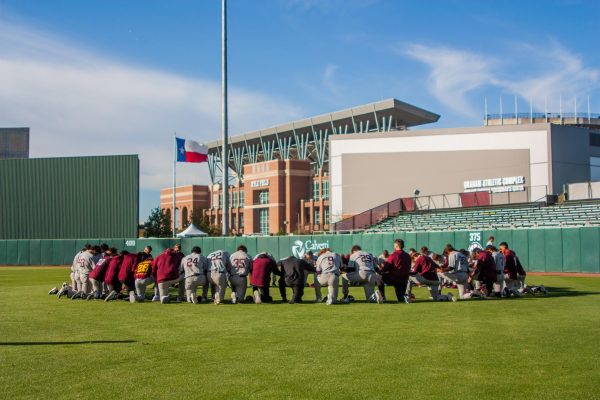
Game four will feature the winners of the opening games as they will play afterwards at 8 p.m. and will determine the next match-ups, with the winner advancing to the regional final and the loser playing against the winner of the first elimination game.
The regional could ultimately be decided by Sunday night as the winner of that second elimination game that begins at 3 p.m. will advance to the regional final, set for an 8 p.m. first pitch. If a winner-take-all game is needed, they will play on Monday, June 1 at an undetermined time.
Texas State will begin their run against the USC Trojans with first pitch set at 8 p.m. this Friday, May 29 in Olsen Field at Blue Bell Park in College Station, Texas following the Texas A&M-Lamar game. The game will be available to watch on ESPNU.