
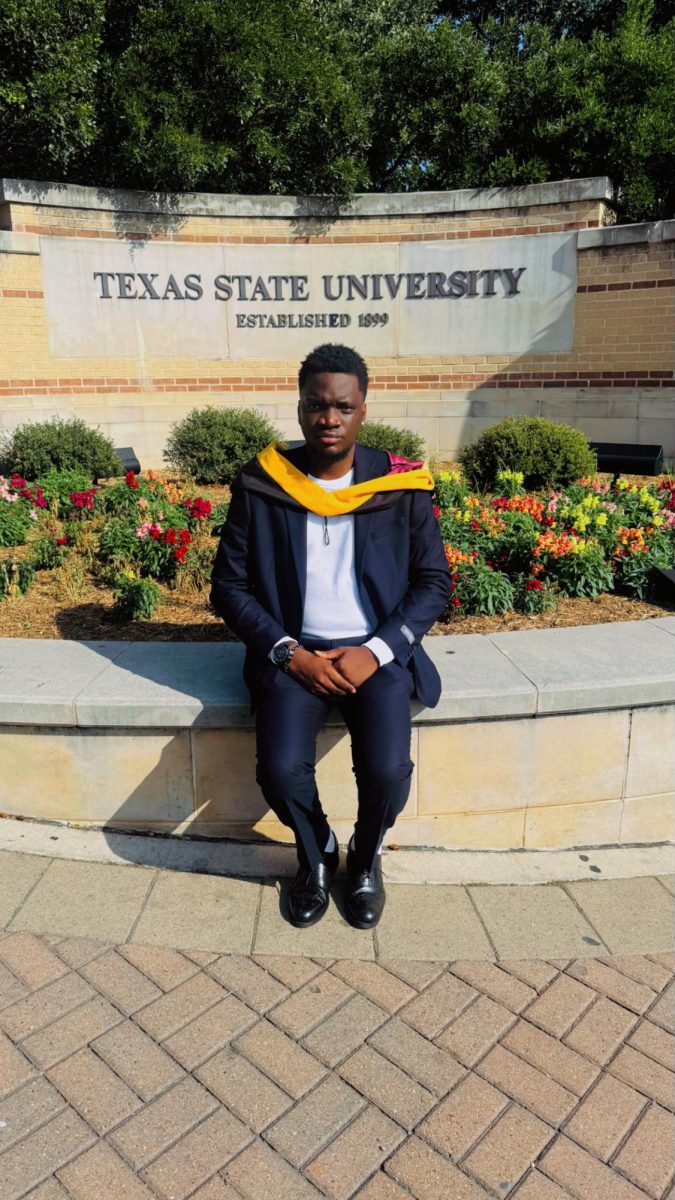
When Ayodeji “Deji” Akinloye enrolled in Texas State University’s sustainability studies program in 2023, his goal was simple: finish his master’s degree.
“I was just trying to pass my class,” Akinloye said, referring to an environmental ethics course in the program.
Akinloye previously earned his undergraduate degree in chemistry in Nigeria. When he was completing the sustainability studies program at Texas State, Akinloye was inspired to found PURE-NG because of his ties to Nigeria.
Launched in early 2025, PURE-NG is a nonprofit environmental organization focused on waste reduction, recycling education and community cleanups in Lagos, Nigeria. Lagos was a natural starting point for PURE-NG because it is Akinloye’s hometown.
“I wanted to start in Lagos because that’s where I actually live, just giving back to my own community where I came from,” Akinloye said.
A rapidly expanding megacity, Lagos faces significant waste management challenges. Despite government efforts to improve sanitation, communities still lack access to sustainability education.
“That’s where I felt the gap in sustainability awareness was,” Akinloye said. “If people understand the impact of their actions, change becomes possible.”
Akinloye said his idea for PURE-NG was inspired by an environmental praxis assignment asking students to identify a carbon-consumptive habit in their lives and measurably change it over the semester. He chose to reduce his use of single-use plastics, a habit he said made him more aware of his daily environmental impact.
“I stopped taking plastic bags from stores. I started using reusable bags. I paid more attention to how much water I was wasting,” Akinloye said. “Those small changes made me realize how much individual behavior actually matters.”
Seth Thompson, assistant professor of instruction in the department of philosophy, taught the class. He said Akinloye demonstrated a commitment to environmental issues even before enrolling in the environmental ethics class.
“I am confident that he would have founded this organization without my class,” Thompson said. “Still, it means everything to me when I see students make meaningful impact. As an educator, there’s no better outcome than seeing a student confront real-world problems in practical, meaningful ways.”
Akinloye said his growing interest in sustainability was shaped by what he observed in the U.S., particularly how waste is managed compared to Lagos.
“In the U.S., you see separate bins for recycling everywhere. Paper here, plastic there. It’s organized,” Akinloye said. “Back home, that level of awareness isn’t as widespread.”
In early 2025, Akinloye decided to act on the idea. He registered PURE-NG as a nonprofit organization in Nigeria, a process that took months due to rejected name submissions, legal fees and other bureaucratic delays. The process was self-funded, and Akinloye said recruiting volunteers willing to commit to unpaid work was another early challenge.
“There were moments I really questioned whether it was worth it,” Akinloye said. “But I had already started. Giving up would’ve meant all of the efforts, time and money I had spent going to waste.”
While finishing his studies in Texas, Akinloye assembled a volunteer team in Nigeria, relying on Zoom calls and constant communication to keep the project moving. Oyindamola Adebola, PURE-NG’s project coordinator in Lagos, joined PURE-NG during its early planning stages and now coordinates the organization’s projects on the ground in Lagos. According to her, distance was never a barrier.
“Despite the time difference and busy schedules, Deji’s communication has made the work smooth and stress-free,” Adebola said. “He follows through immediately; if we say next week, it’s next week.”
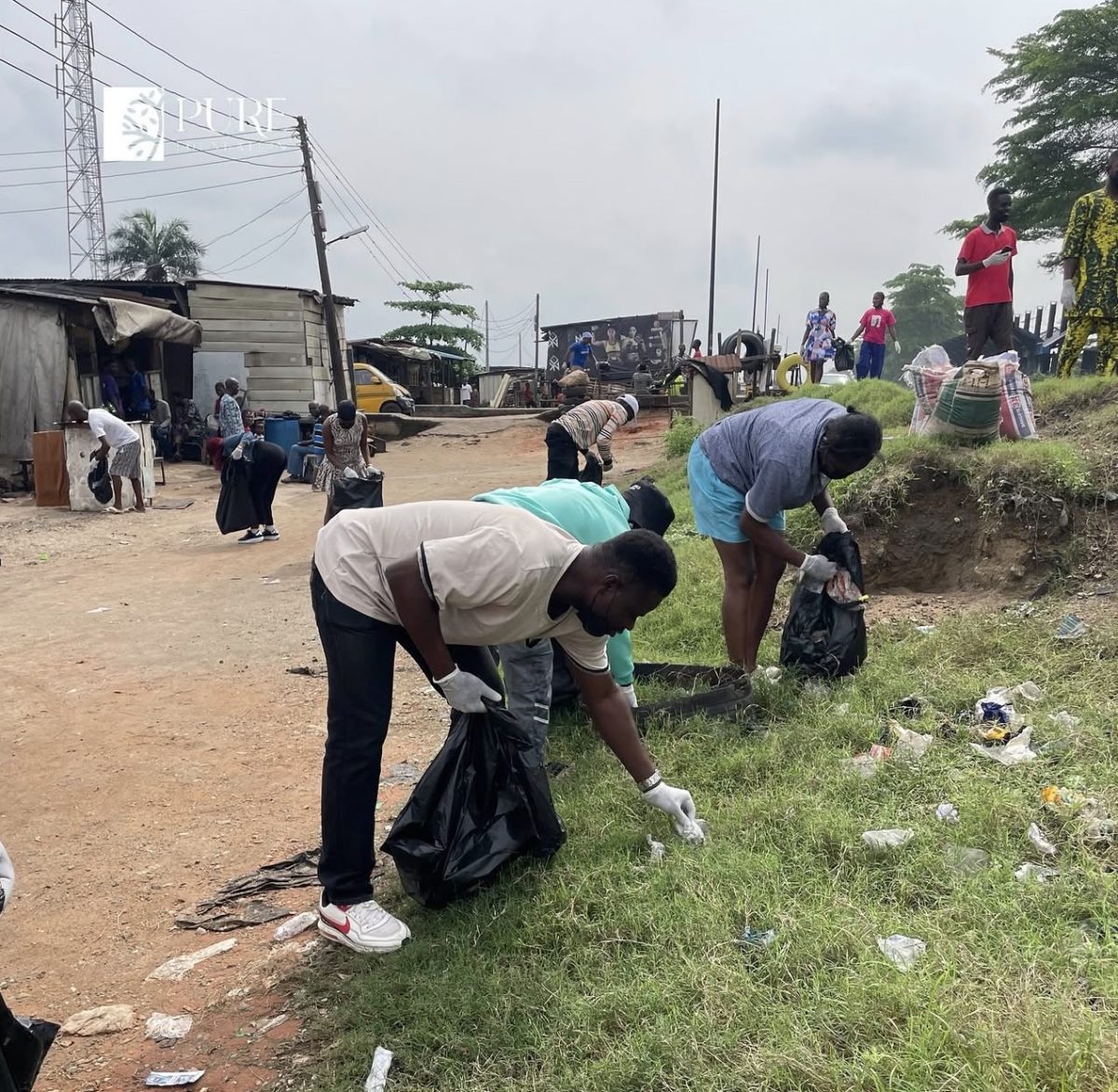
PURE-NG hosted its first community cleanup and outreach event on Oct. 11 in Lagos’ Ajegunle Community, an area affected by clogged gutters and flooded streets, according to the organization’s report. For Adebola, that day marked a turning point.
“It didn’t fully strike me how important the work was until the day of the activation,” Adebola said. “Community members were already gathered and eager to help. The difference between when we arrived and when we left was glaring.”
There were 30 participants at the cleanup consisting of 25 community members, two volunteers, two local leaders and one media personnel. Adebola said residents not only participated but brought tools and helped clean streets beyond Ifelodun St. to nearby Unity St. in Ajegunle and reached the adjoining parts of Thomas, Lagos State without incentives.
The response to the cleanup exceeded Akinloye’s expectations.
“I honestly didn’t know how people would react,” Akinloye said. “Seeing that turnout made me realize this was something worth building.”
PURE-NG plans to host quarterly cleanups and expand into secondary schools, where Akinloye hopes to establish sustainability clubs and early environmental education programs.
Long-term, Akinloye envisions turning PURE-NG into a large-scale waste management company, partnering with governments, businesses and international organizations across residential and commercial areas in West Africa and eventually other regions in Africa.
After graduating last fall, Akinloye said he hopes other Bobcats, particularly international students, see possibilities in their coursework, even in assignments that feel small. He said studying in the U.S. exposed him to systems that work differently, and real impact comes from adapting those ideas to address challenges in one’s home country.
“I didn’t know I could balance all of this,” Akinloye said. “Now I feel like there’s nothing I can’t do.”